Start with the right fillet and a dry surface
Pan-searing gives skin-on fish two appealing textures: a crisp, savory surface and tender flesh. It works well with fillets sturdy enough to lift and turn without falling apart. A fairly even thickness makes cooking easier, but you can also work with a tapered fillet by paying closer attention to its thin end.
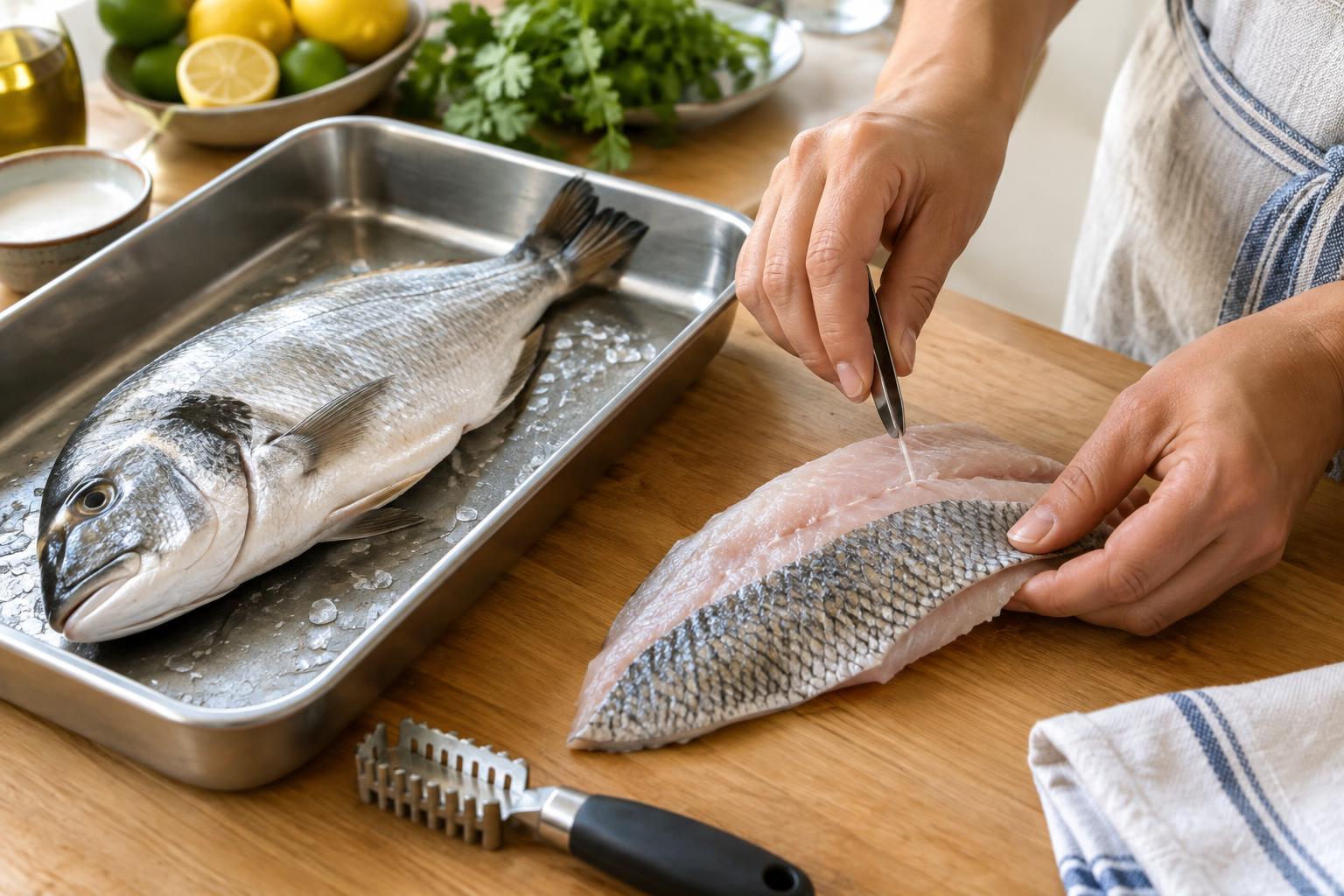
Keep fish refrigerated until you are ready to prepare it. If it is frozen, thaw it in the refrigerator rather than on the counter. Check for any remaining scales and pin bones, then pat both sides thoroughly dry with paper towels. Moisture on the skin must evaporate before the skin can brown, so this step matters more than a long list of seasonings. Discard the towels and wash your hands and any surfaces that touched the raw fish.
Season the flesh with salt shortly before cooking. Salt on the skin is fine too, but if it draws out visible moisture while the pan heats, blot the skin dry again. Hold off on lime juice or a wet marinade until after searing: liquid can soften the skin and encourage steaming instead of crisping.
Heat the pan, then lay the fish skin-side down
Choose a skillet large enough to leave space around each fillet. A nonstick pan can make your first attempts easier; a well-preheated stainless-steel or cast-iron skillet can also work. Add a thin, even film of neutral cooking oil and heat it over medium to medium-high heat. The oil should shimmer, not smoke heavily. If the pan smokes, lower the heat and let it settle before adding the fish.
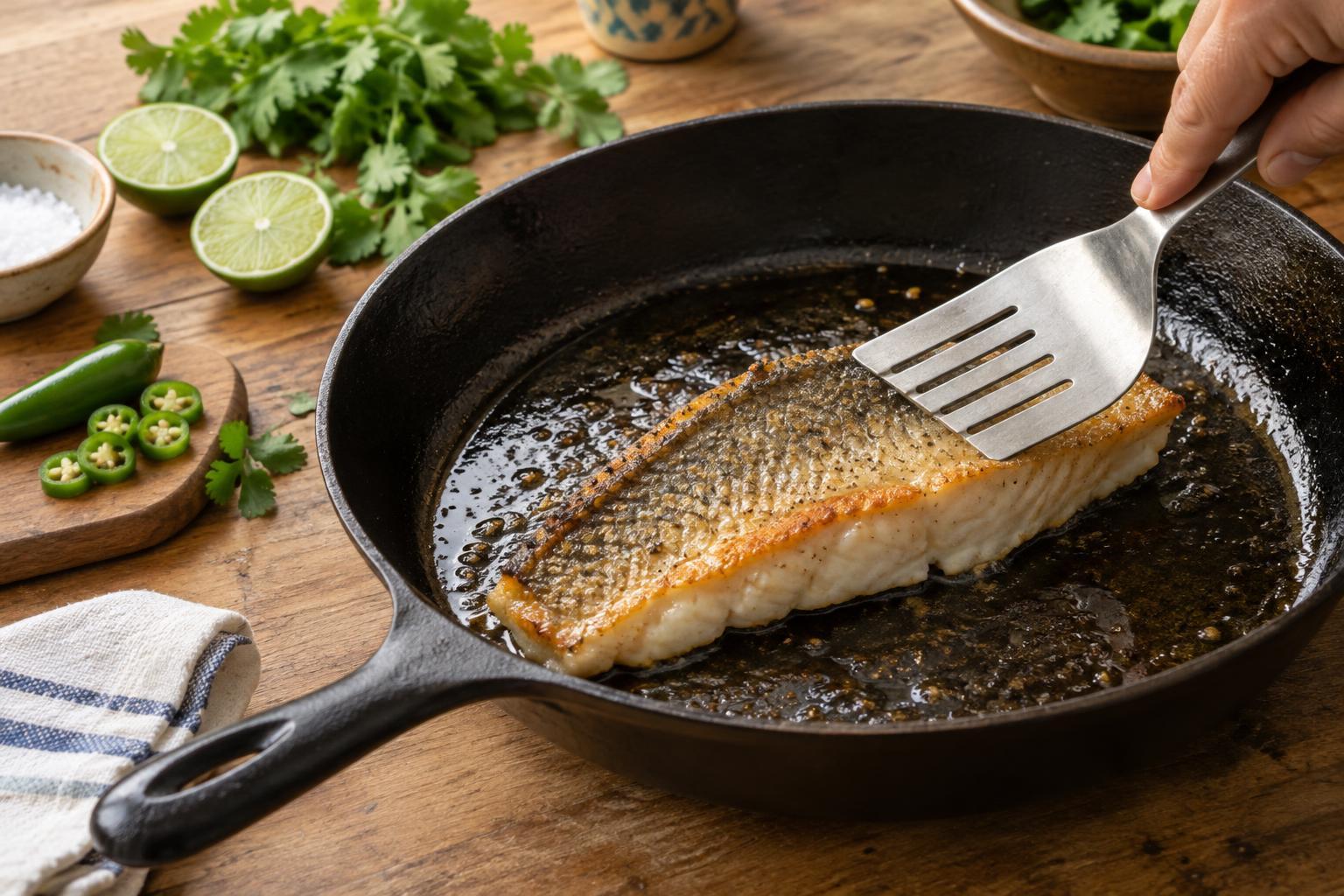
Set each fillet into the pan skin-side down, placing the edge nearest you first and lowering the rest away from you to reduce splatter. For the first several seconds, press gently with a fish spatula or another broad spatula. Fish skin often contracts on contact with heat; brief, even pressure keeps it against the pan. Do not press so hard that you squeeze or break the flesh.
Leave the fillet mostly undisturbed. As the skin cooks, it becomes firmer and usually releases more readily from the pan. If it resists when you try to lift an edge, give it a little longer rather than scraping it free. Adjust the burner if the oil splatters aggressively or the skin darkens before the flesh has begun to cook through.
Let the skin side do most of the work
For many fillets, most of the cooking can happen skin-side down. Watch the flesh from the side: it will gradually change from translucent to opaque as heat travels upward. When that change has reached well past the halfway point and the skin feels crisp, carefully turn the fish. Cooking time varies with the fillet’s thickness, its starting temperature and the pan, so use these cues rather than relying on a fixed number of minutes.
Cook the flesh side briefly, using lower heat if needed, then check the thickest part. For a straightforward food-safety target, cook fish to 145°F (63°C) at its thickest point, measured with a food thermometer. If you do not have a thermometer, look for flesh that is opaque and separates easily with a fork, though appearance is less precise. Lift the fillet out gently and serve it soon, ideally with the skin facing up so it stays crisp.
If the exterior is browning too quickly while the center remains underdone, reduce the heat and continue cooking gently. Thin fillets need especially close attention after the turn. A broad spatula supports the fish better than tongs, which can tear its delicate surface.
Add coastal flavors without losing the crunch
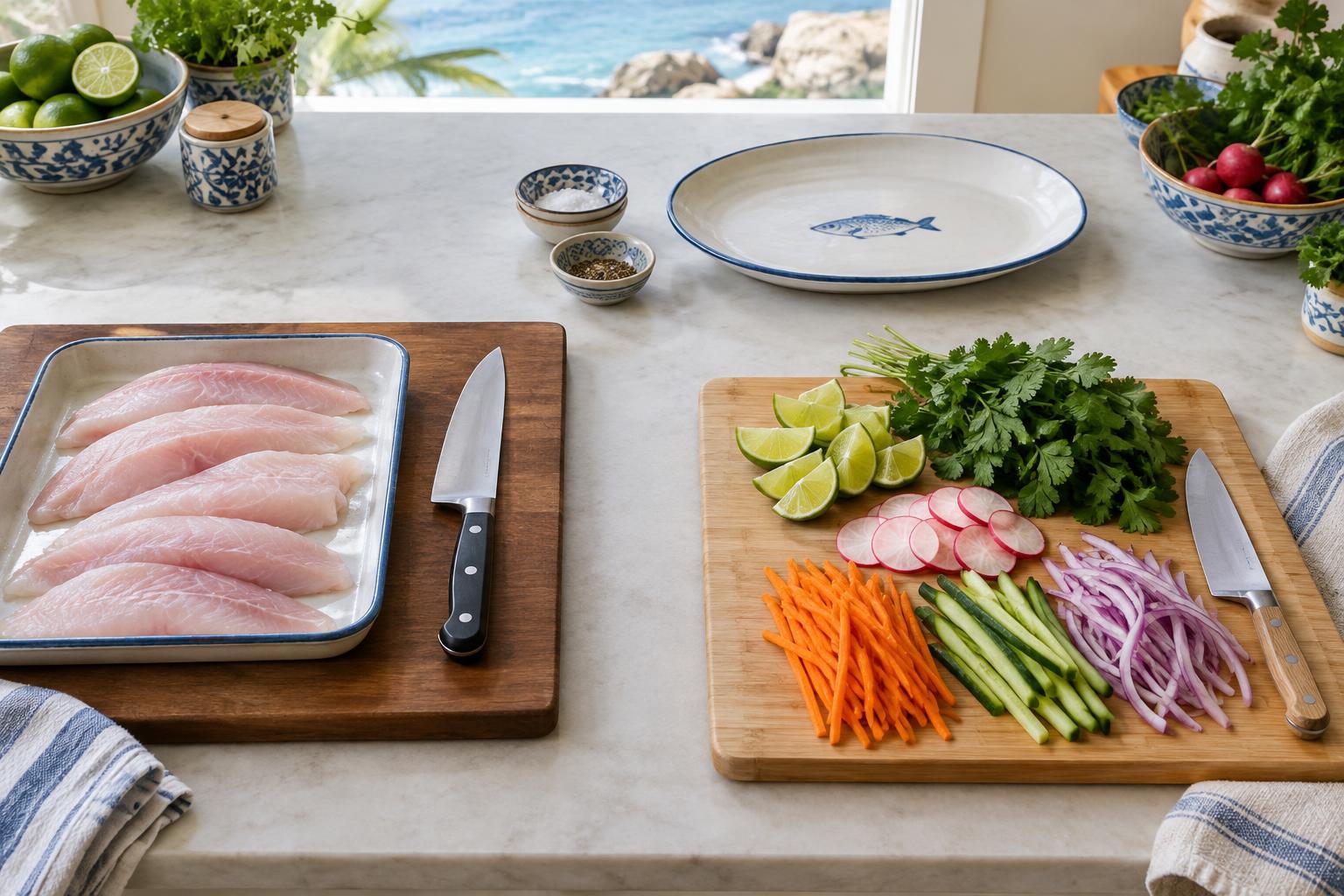
A squeeze of lime, a spoonful of herb sauce or a bright tomato-and-onion relish can balance the richness of seared fish. Put juicy toppings beside the fillet or on the plate rather than directly on the skin. Warm beans, rice, sautéed greens or a simple cabbage salad can round out the meal without complicating the technique.
Keep raw fish and its juices away from ready-to-eat garnishes, and use clean utensils and plates for serving. Citrus juice is excellent for flavor, but it does not make raw seafood equivalent to cooked seafood: acid changes its texture without providing the same heat treatment. For this pan-seared dish, add citrus after the fish is cooked and enjoy the contrast between its brightness and the crisp skin.