Start with the right plantain
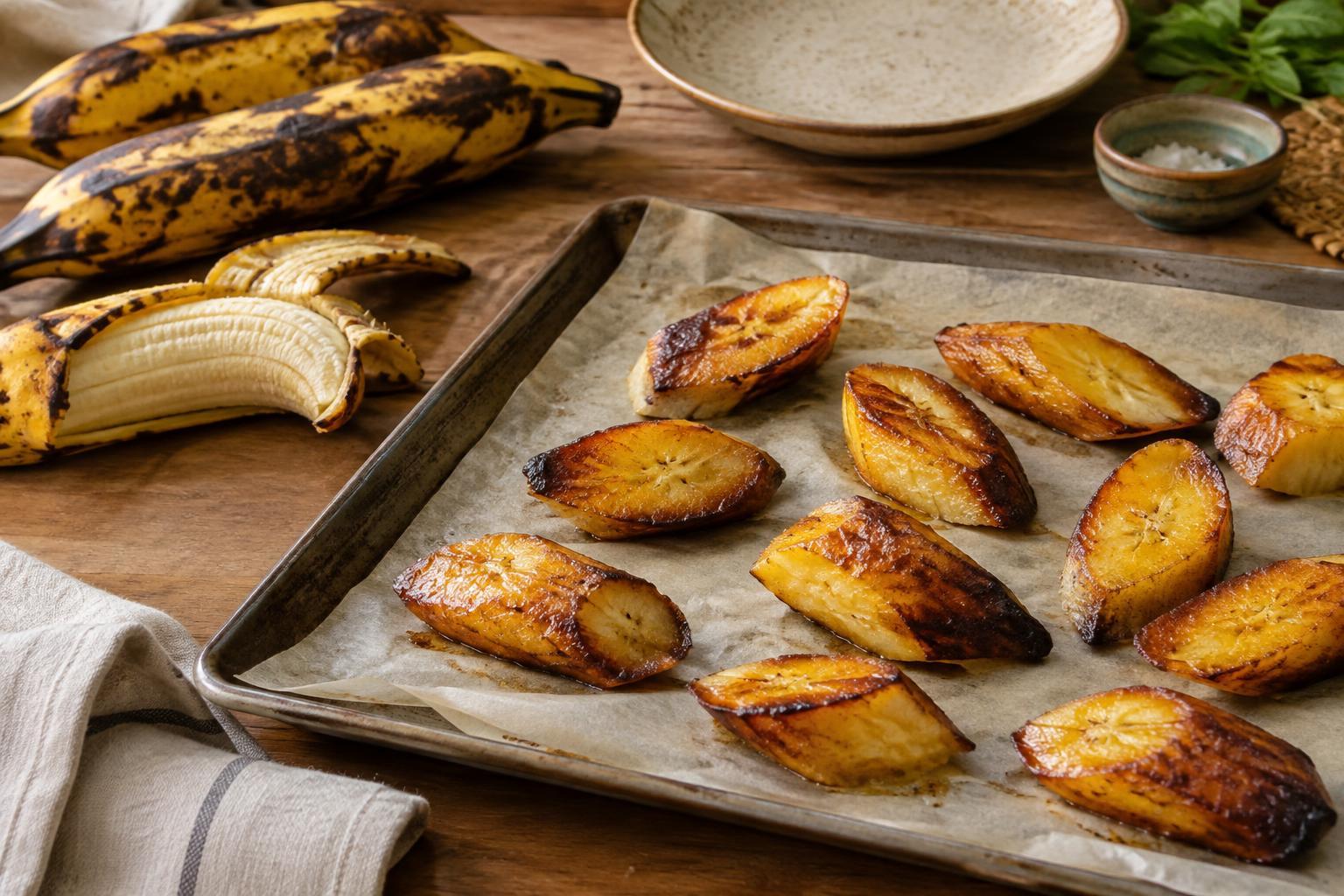
For a sweet, tender roast, choose plantains with mostly black skins and some give when gently pressed. Yellow plantains with a few dark spots will roast well too, but they tend to be firmer and less sweet. A green plantain is better suited to preparations that call for a starchier texture. Ripe does not mean spoiled: skip fruit with leaking flesh, mold, or an unpleasant fermented smell.
Plantains are denser than dessert bananas, and their thick peels can cling to the flesh. To peel a ripe one, trim both ends, score the skin lengthwise without cutting deeply into the fruit, and lift it away in sections. If the plantain is very soft, handle it gently so it stays in broad pieces. Those broad surfaces are useful: they give the plantain room to brown while leaving plenty of moist flesh inside.
Cut for browned edges and a soft center
Halving plantains lengthwise is a forgiving way to roast them. Each half has a flat side that can make contact with the pan, while its thickness protects the center from drying out. For smaller servings, cut the peeled plantain into thick diagonal pieces instead. Avoid very thin slices if your goal is a plush interior; they can turn chewy before they develop much color.
Lightly coat the pieces with a neutral oil and a small pinch of salt. You need just enough oil to prevent sticking and encourage even browning, not a puddle in the pan. Ripe plantains already contain sugars, so they do not need added sugar to caramelize. If you want warm spices or a little chile, add them sparingly; a heavy coating can scorch before the plantain is done.
Roast hot, with space between the pieces
Heat the oven to 425°F (220°C). Arrange the plantain halves cut side down on a lightly oiled metal baking sheet, leaving space between them. A crowded pan traps steam, which softens the surface instead of helping it brown. Roast for about 15 minutes, then check the undersides with a thin spatula. Once they release fairly easily and show golden-brown patches, turn them over.
Continue roasting for roughly 5 to 15 minutes, until the centers are tender and the edges are a deeper golden brown. Exact timing depends on ripeness, size, and the pan, so use the clock as a reminder to check rather than as the final test. Thick diagonal pieces may need less time. If the plantains are browning quickly but still firm inside, lower the oven temperature slightly and give them a few more minutes. If they are tender but pale, allow a little more time with their cut surfaces exposed, watching closely so the sugars do not burn.
Keep the sweetness without losing moisture
The main defense against dryness is to stop roasting when the plantains are tender, not when every surface is dark brown. Look for caramel-colored patches and edges rather than an entirely crisp exterior. Leaving the pieces thick, using a small amount of oil, and avoiding repeated turns all help preserve their soft centers. Let them rest on the pan for a minute or two before transferring them; very ripe plantains can break apart when piping hot.
If a batch comes out dry, try thicker cuts or a shorter roast next time. If the plantains are mushy and barely browned, use a less crowded pan and make sure the oven is fully heated before they go in. A plantain that is extremely soft to begin with may hold its shape better roasted in its peel: slit the peel lengthwise, place it on a baking sheet, and bake until the flesh is hot and tender. This produces a softer result with less exposed caramelized surface, but it is a useful option for delicate fruit.
Serve them where sweetness belongs
Roasted plantains are best served warm, when the centers are soft and the browned edges are still distinct. Set them beside beans, rice, grilled vegetables, or a savory seafood dish for contrast. A squeeze of lime after roasting can brighten the sweetness, while a spoonful of tangy sauce can make the plate feel balanced. Add acidic toppings at the table rather than before roasting so the plantain surface has a chance to brown.
If you make them ahead, refrigerate the cooked plantains promptly in a covered container. Reheat them in a hot oven or skillet until warmed through; the edges may not be quite as distinct as they were fresh, but a little dry heat helps more than steaming. Whether served simply or dressed up, the aim is the same: golden patches outside, a tender center, and the natural sweetness of ripe plantain.