Start with firm, green plantains
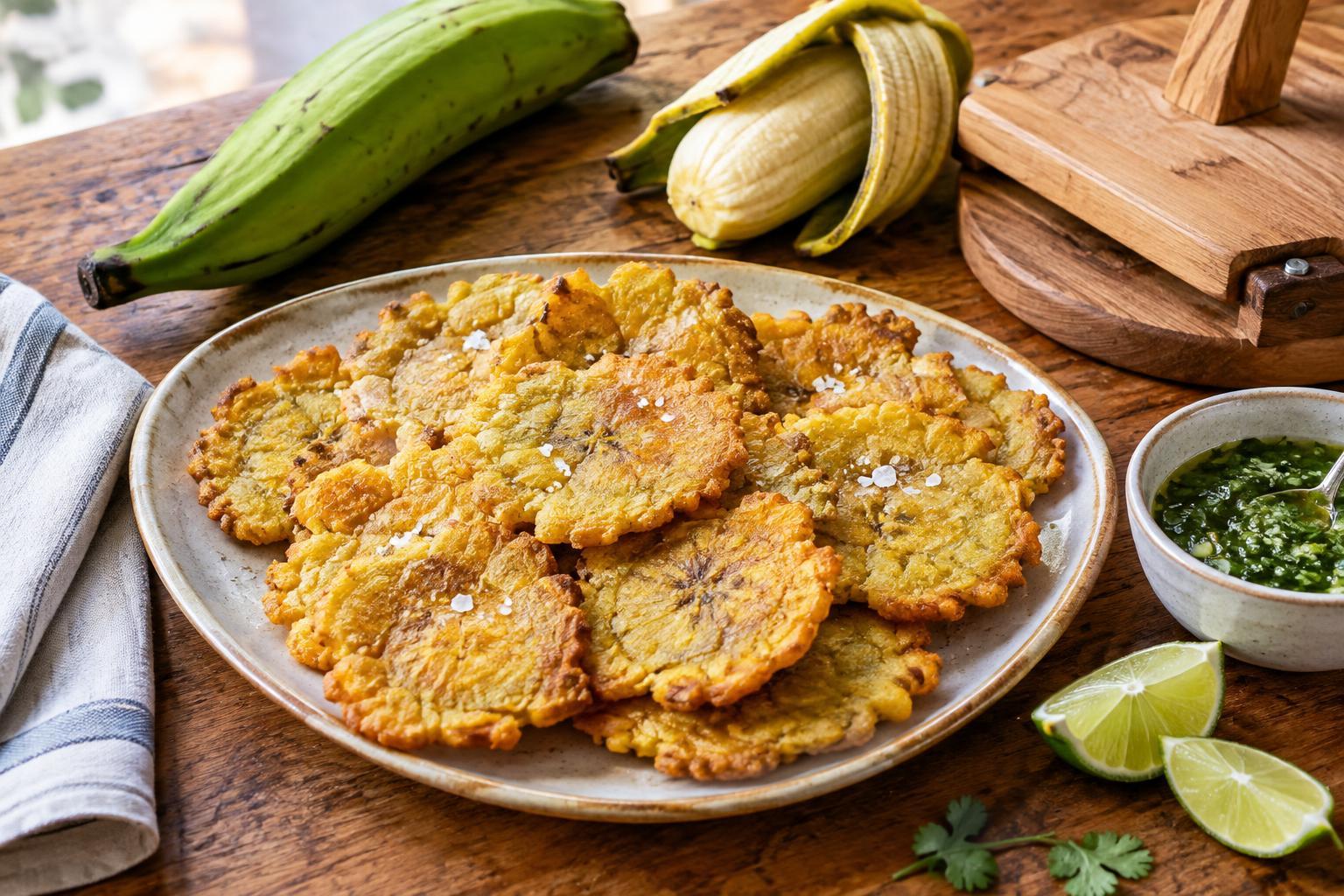
Tostones are slices of green plantain that are fried, flattened and fried again. The first fry softens the plantain enough to press; the second makes its broad surfaces crisp. Unlike a ripe plantain, which becomes sweeter and softer as it matures, a green plantain has a mild, starchy character that suits salt, garlic and bright sauces.
Choose firm plantains with mostly green skins. A few dark marks on the peel are fine, but a plantain that feels soft or has turned mostly yellow will behave differently in the pan. Plan on about one plantain per person for a generous side. You will also need a neutral frying oil, salt, a knife, a sturdy glass or small flat-bottomed pan, and a piece of parchment or a clean cutting board for pressing.
Peel and slice without a struggle
Green plantain skins cling tightly to the flesh. Cut off both ends, then score the peel lengthwise in a few places, taking care not to cut deeply into the plantain. Work a thumb or the edge of a spoon beneath the peel and lift it away in sections. If any thin strips remain, trim them off so they do not separate during frying.
Cut the peeled plantains crosswise into pieces roughly one inch thick. Keeping the pieces similar in size helps them soften at the same pace. Pat them dry before they go near hot oil: surface moisture can cause splattering. Set up your pressing area and a plate lined with paper towels before heating the pan, so you will not have to look for equipment while the oil is hot.
Fry, flatten and fry again
Pour enough oil into a heavy skillet to come partway up the plantain pieces, and heat it over medium heat. Test with one piece: the oil should bubble steadily around it without smoking or darkening it immediately. Fry in uncrowded batches, turning as needed, until the pieces look lightly golden and feel tender enough to press, usually several minutes per side. Lift them out with a slotted spoon and let excess oil drain.
While the pieces are still warm, press each one between sheets of parchment, or against a cutting board, until it forms a disk about a quarter to a half inch thick. Press firmly but not so hard that it breaks apart; uneven edges are welcome because they crisp well. Return the disks to the oil in batches. Fry until both sides are golden and crisp, then drain briefly and sprinkle with salt while hot. If they brown too quickly before crisping, lower the heat slightly.
Keep the texture crisp and the kitchen safe
Tostones taste best soon after their second fry, when the contrast between the crisp exterior and tender middle is strongest. If you are cooking for a group, you can complete the first fry and flatten the pieces ahead of the final batch. Keep the pressed pieces in a single layer, then give them their second fry shortly before serving. Avoid stacking finished tostones while they are steaming, which can soften their surfaces.
Use a stable pan, keep its handle turned away from the edge of the stove, and never leave hot oil unattended. Lower plantains into the oil carefully rather than dropping them. Keep water away from the pan; if the oil begins to smoke, turn off the heat and let it cool. Follow your local guidance for disposing of cooled used oil rather than pouring it down the sink.
Serve with bright coastal flavors
A squeeze of lime just before eating brings brightness, but add it sparingly if you want the tostones to stay crisp. Serve them with a garlicky dipping sauce, a tomato-and-onion relish, or a simple avocado mash. They also make a sturdy side for cooked fish, shrimp or beans. Put sauces on the table separately so everyone can dip a hot tostone at the last moment.
If you serve tostones beside a citrus-marinated seafood dish, keep raw seafood and its juices separate from ready-to-eat plantains, sauces and utensils. Citrus changes seafood’s texture and appearance, but citrus curing does not make raw seafood equivalent to cooked seafood. For guests who prefer not to eat raw seafood, pair the tostones with fully cooked seafood or a vegetable topping instead.