Start with the right root
Yuca, also called cassava, is a starchy root that becomes pleasantly soft and dense when cooked. It makes a simple side for fish, beans, stews and grilled vegetables, especially with a citrusy sauce or a little oil and salt. Fresh yuca needs more preparation than a potato, though: its thick peel and tough central fiber are not pleasant to eat, and the root must not be eaten raw.
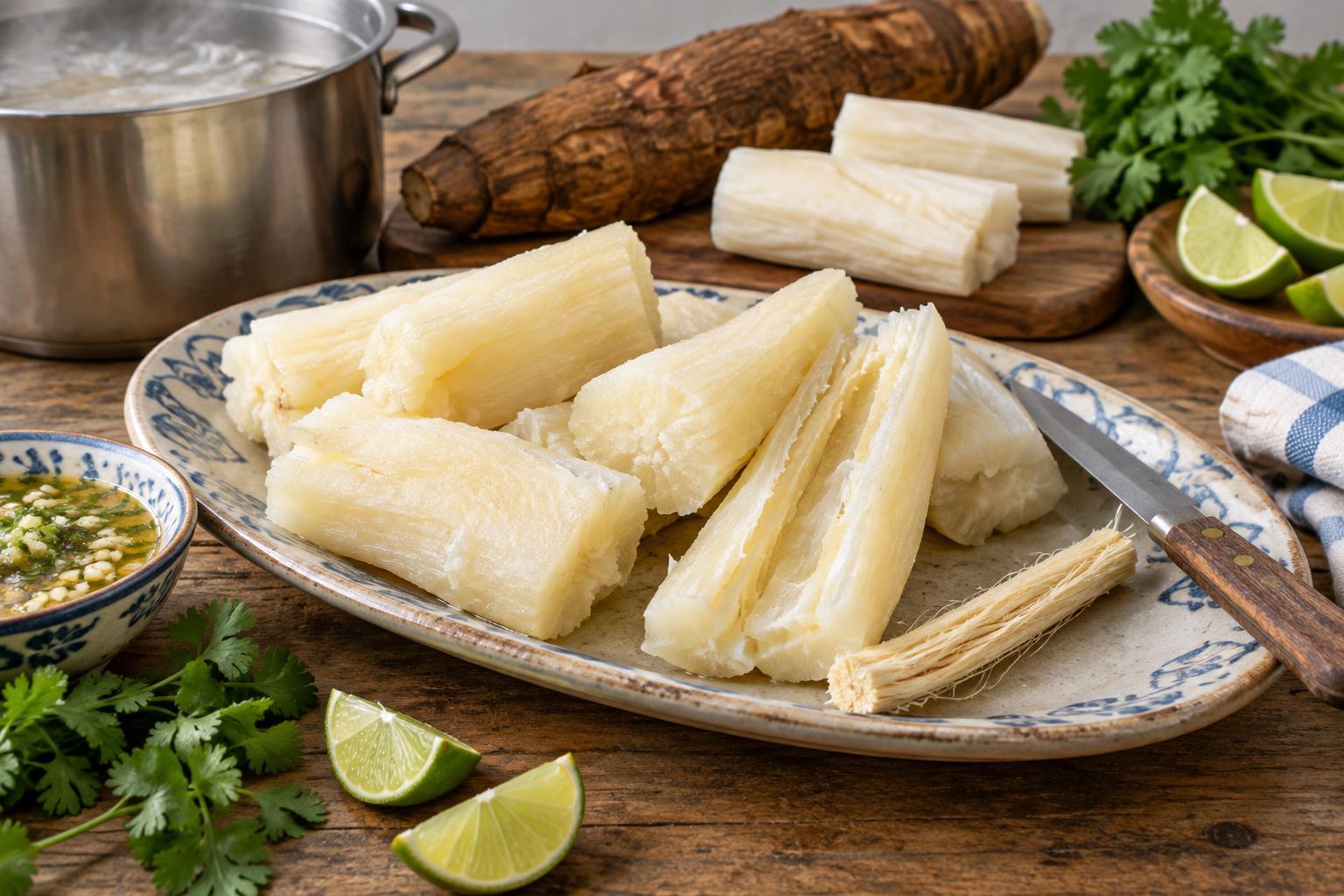
Choose yuca sold for cooking by a reputable food retailer. Look for firm roots without soft, moldy or badly damaged areas. A cut end may reveal the flesh inside; it should look mostly white or pale cream. If you find extensive dark or blue-black streaks after cutting into the root, or it smells off, discard it. Do not use an unidentified or bitter variety of cassava. Some varieties require specialized processing beyond ordinary home boiling.
Plan to cook fresh yuca soon after buying it, since its quality can deteriorate in storage. Keep it in a cool, dry place for a short time, or peel and cut it before refrigerating it in a covered container of water until you are ready to cook. Keep your knife, board and hands clean, particularly if you are preparing seafood for the same meal.
Peel beyond the brown skin
Trim both ends of the root, then cut it crosswise into pieces roughly the length of your palm. Short sections are easier to handle than a whole root. Stand each piece on a stable cut end and carefully slice down through the thick outer layers, following the curve of the flesh. Remove the brown skin and the firm layer just beneath it; your goal is to expose the pale, starchy interior all around. A small sharp knife can help you lift stubborn strips.
Rinse the peeled pieces and cut larger sections lengthwise so they will cook more evenly. You may see a stringy line or firmer center running through each piece. There is no need to dig it out now if doing so would break up the raw root. It is usually much easier to pull away once the yuca has softened. Remove any remaining discolored patches as you work, and discard a piece if discoloration runs deeply through it.
Boil until fully tender
Put the prepared yuca in a pot and cover it generously with fresh water. Add a little salt if you like. Bring the water to a boil, then reduce the heat to maintain a steady simmer. Keep the pieces submerged and cook until a fork or knife slides easily through the thickest part. Depending on the size and age of the root, this can take roughly 20 to 45 minutes; tenderness matters more than the clock. If the water level drops, add more hot water.
Do not taste yuca to test whether it is done. Cassava naturally contains compounds that make proper preparation and thorough cooking important. Peeling and boiling food-grade yuca in ample water are key steps; when it is tender, drain it and discard the cooking water rather than using it as stock or sauce. If a piece remains hard or unusually tough while the others soften, give it more time or discard it.
Lift out the core and serve
Let the drained yuca cool just enough to handle. Cooked pieces often split along their length, revealing a narrow, woody strand at the center. Pull that strand away with your fingers or the tip of a knife, or cut each piece lengthwise and lift it out. The central core is removed mainly because its fibrous texture makes eating unpleasant. Check each piece before serving, as the strand may be more noticeable in some roots than others.
For a simple side, toss the warm yuca with olive oil, salt and chopped herbs, then finish with lime just before serving. You can also spoon over a garlicky citrus dressing or serve it alongside sautéed onions and peppers. The lime adds brightness to already cooked yuca; it is not a substitute for boiling. Likewise, if you serve yuca with a citrus-cured seafood dish, remember that citrus curing does not make raw seafood equivalent to cooked seafood. Keep raw seafood and its juices separate from the cooked side dish, and use clean utensils when serving.
Leftover cooked yuca can be refrigerated promptly in a covered container. Reheat it until hot, or pat it dry and brown the pieces in a pan for crisp edges. Whether served soft from the pot or crisped the next day, removing that central strand gives yuca its best texture.