Choose the chile and prepare your workspace
Charring softens a fresh chile and adds toasted, smoky notes that work well with lime, herbs, beans and grilled vegetables. Poblanos are a useful choice when you want broad pieces for stuffing or slicing; jalapeños and serranos can bring a sharper bite to salsa. Chiles vary in heat, even within the same type, so taste a small amount before adding a whole batch to a dish.
Wash the chiles under running water before you start, then dry them thoroughly. Dry skins blister more readily and are easier to grip with tongs. Set out a heatproof bowl or covered container, a plate for peeled chiles and a small bowl for discarded skins. Use a cutting board and knife that are clean, especially if you are preparing seafood or other foods alongside the chiles.
Chile oils can irritate skin and eyes. Wear food-safe gloves if you are handling several hot chiles, and avoid touching your face. Wash your hands, tools and work surface with soap and water afterward. Keep the cooking area ventilated; charring chiles can release smoke and irritating vapors.
Char until the skin blisters, not until the flesh burns
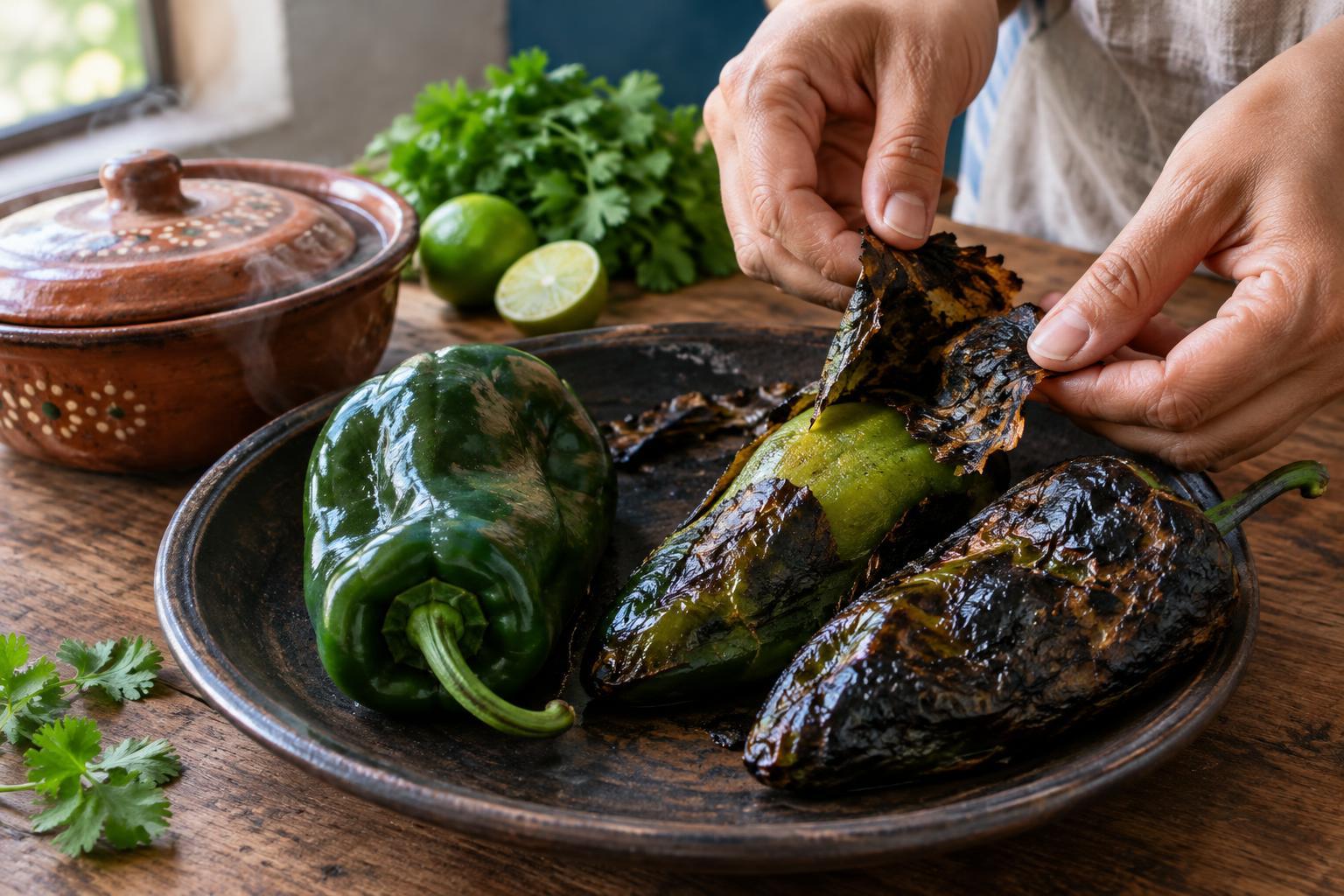
For a gas burner, hold one chile with sturdy tongs above a medium flame, turning it as the skin blisters and darkens. Do not leave it unattended or set it where it could fall into the burner. For a broiler, arrange chiles on a baking sheet and turn them as each side blisters. A dry, heavy skillet over medium-high heat also works, though it may leave more uncharred spots. Choose the method that lets you handle the chiles safely and watch them closely.
Aim for patches of blackened, papery skin around most of the chile. A few green areas are fine; you do not need to scorch every crevice. If the flesh collapses or the chile begins to leak heavily, it has likely gone further than needed. Move each finished chile straight into the heatproof bowl and cover it. The goal is to loosen the skin while keeping the flesh intact and juicy.
Let steam do the loosening
Rest the covered chiles until they are cool enough to handle, usually about 10 to 15 minutes. Their trapped moisture helps separate the blistered skin from the flesh. You can use a lidded bowl or set a plate over the top; there is no need to add water. Open the container away from your face to avoid the first burst of hot steam.
Work over a plate or the bowl so you can catch any flavorful juices. Pinch and lift the loose skin with your fingers, or gently scrape stubborn spots with the back of a small knife. A clean paper towel can help grip slippery flakes. Leave tiny pieces of skin behind if removing them would tear up the chile. Those flecks are unlikely to spoil a salsa or sauce, and the flesh matters more than a perfectly bare surface.
Skip the rinse and use the whole chile thoughtfully
Rinsing a peeled chile under the tap is quick, but it can wash away juices and some of the charred flavor. Instead, brush off loose flakes with your fingers or the paper towel. If a patch of skin is firmly attached, trim it away only if its texture would bother you. For a smooth sauce, blend the peeled chile and strain the sauce if needed rather than trying to scrub every bit of skin off first.
Remove the stem, then decide how much of the interior to keep. Cutting out the pale ribs and scraping away seeds can make a chile easier to chop and may reduce some heat, but it will not reliably make a hot chile mild. Add chopped chile gradually to a lime-and-herb dressing, fold strips into warm beans, or blend the flesh and collected juices into a sauce. Taste before adding more acid or salt so the chile remains part of the flavor rather than disappearing behind it.
Store safely and pair with seafood carefully
Use peeled chiles promptly or refrigerate them in a clean, covered container. Do not leave them at room temperature for an extended period, and discard them if they develop an off smell or visible spoilage. If you prepare a large batch, portion and freeze some for later sauces or cooked dishes. Keep ready-to-eat chiles and their juices away from cutting boards, utensils and containers used for raw seafood unless those items have been thoroughly cleaned.
Charred chile can bring depth to a citrusy seafood topping, but it does not change the safety of the seafood itself. Citrus juice can change raw seafood’s color and texture; it does not make raw seafood equivalent to cooked seafood or reliably eliminate harmful microbes. For a cooked-seafood dish, cook the seafood properly first, then add a clean chile-lime sauce or salsa at serving time.