Why gentle poaching works
Poaching cooks fish in hot liquid without the direct heat of a pan or grill. For thin or flaky fillets, that can mean a tender result with little added fat. The challenge is movement: a rolling simmer can jostle the fish, while repeated turning or poking can pull its flakes apart. A steady, quiet bath is more useful than a vigorously bubbling one.
Choose fillets of similar thickness so they cook at roughly the same rate. Pieces with the skin on may be easier to lift, though skin is optional. If a fillet has a very thin tail end, fold that end underneath to make the piece more even. Pat the fish dry before lowering it into the liquid; this makes it easier to handle and keeps excess moisture from diluting the poaching broth.
Build a shallow, flavorful bath
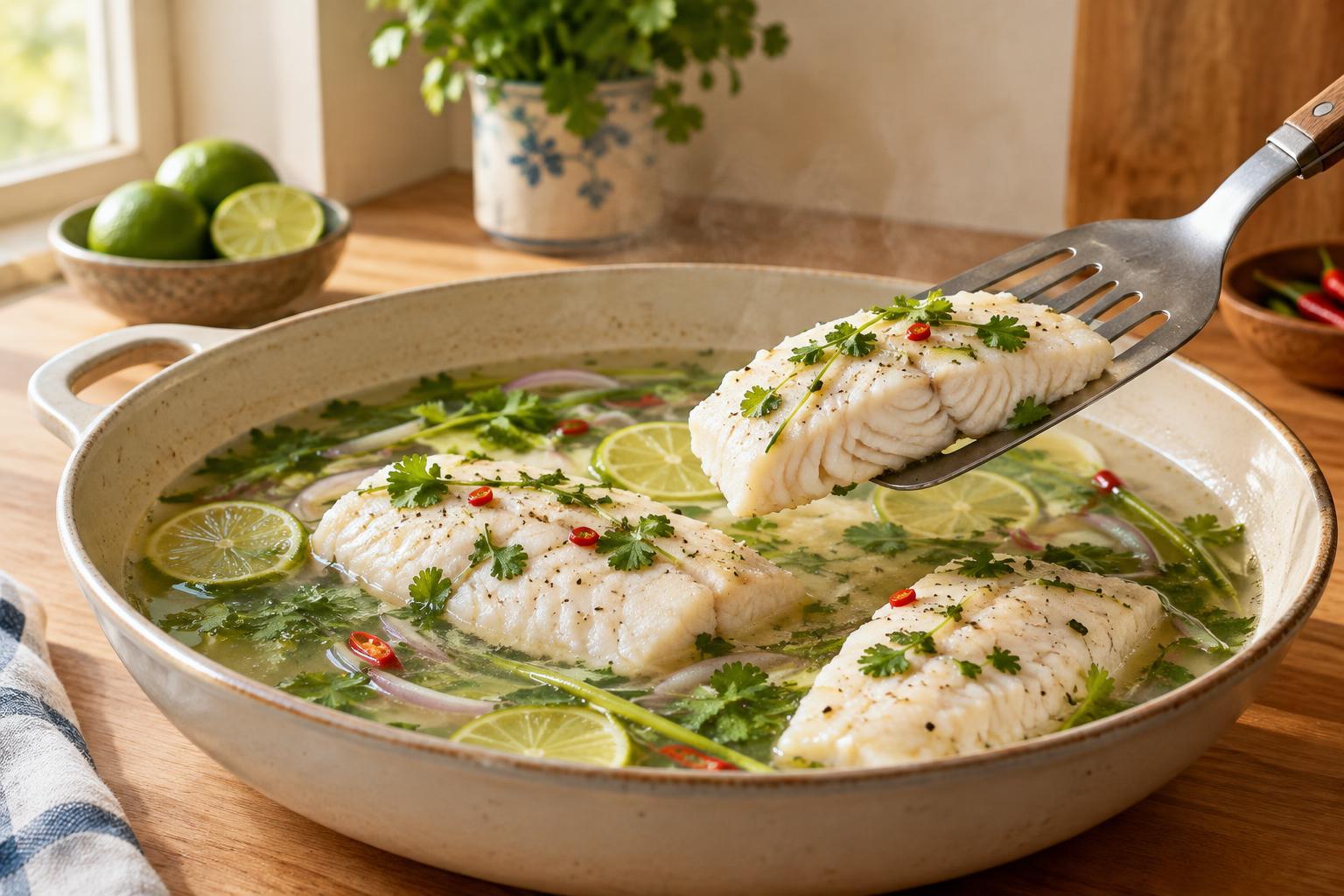
Use a wide pan that holds the fillets in a single layer without crowding. Add enough liquid to come partway up their sides; you can spoon hot liquid over any exposed tops. Water or a mild broth makes a good base. For a coastal Latin American-inspired profile, add a few slices of onion, a smashed garlic clove, cilantro stems, a bay leaf or a strip of lime zest. Keep seasonings light enough that the flavor of the fish remains clear.
Bring the liquid to a gentle heat before adding the fish. A temperature around 170–180°F (77–82°C) gives you a useful target: the surface should look calm, with perhaps an occasional small bubble, not a boil. If you do not have a thermometer for the liquid, lower the heat as soon as bubbling becomes active. Add the fillets with space between them, then adjust the burner to keep the bath quiet.
Cook without disturbing the fillets
Lower each piece into the pan on a wide spatula or slotted turner rather than dropping it in. Once the fish is in place, resist the urge to move it. Covering the pan can help the exposed tops cook evenly, but check that the liquid stays gentle; a covered pan can heat up quickly. If needed, uncover it or briefly move it off the burner.
Cooking time depends on thickness, starting temperature and the heat of the liquid, so use time only as a reminder to start checking. Insert a food thermometer into the thickest part of a fillet. For straightforward home food-safety guidance, cook fish to 145°F (63°C). Opaque color and easy flaking can help you judge texture, but they are less reliable than a thermometer for confirming temperature. Check more than one piece if the fillets differ in size, and remove each one as it finishes.
Lift, finish and serve
To transfer the fish, slide a broad spatula fully underneath it; a second spoon or spatula can support the top if the piece is especially fragile. Lift slowly and let excess liquid drain before setting the fillet on a plate. If you want a neater presentation, poach and serve the fish skin-side down so the skin supports the flakes during the move.
Finish with lime juice, chopped herbs and a drizzle of olive oil after cooking. A spoonful of the warm poaching liquid can moisten the fish without hiding its delicate texture. Serve it alongside rice, tender beans or a crisp vegetable salad. Citrus adds brightness, but it is not a substitute for cooking: soaking raw seafood in citrus juice does not make it equivalent to seafood cooked to a safe temperature.
Handle seafood with care
Keep fish refrigerated until you are ready to cook. Thaw frozen fillets in the refrigerator rather than on the counter, and use separate utensils or wash them thoroughly after they touch raw seafood. Wash hands and clean work surfaces before preparing garnishes or other ready-to-eat foods.
Serve the fish promptly. Refrigerate leftovers in a covered container without leaving them at room temperature for an extended period, and reheat them thoroughly. Gentle poaching is a useful technique precisely because it asks for less handling: prepare the pan, keep the heat calm, confirm doneness and let the fillets rest intact until it is time to serve.