What epazote is
Epazote is an aromatic herb used in Mexican cooking, especially with beans and corn. Its flavor is difficult to reduce to one familiar herb: it can seem earthy, resinous and slightly citrusy, with a pungent edge. That assertive character is why a small sprig can change a whole pot. Epazote is usually a supporting flavor, not a leafy green to add by the handful.
You may see it sold fresh in bunches or dried in small packets. The plant’s botanical name is Dysphania ambrosioides; older labels may use Chenopodium ambrosioides. Names and packaging vary, so look for epazote on a culinary herb label rather than buying an unfamiliar plant based on appearance alone.
How to recognize and choose a bunch
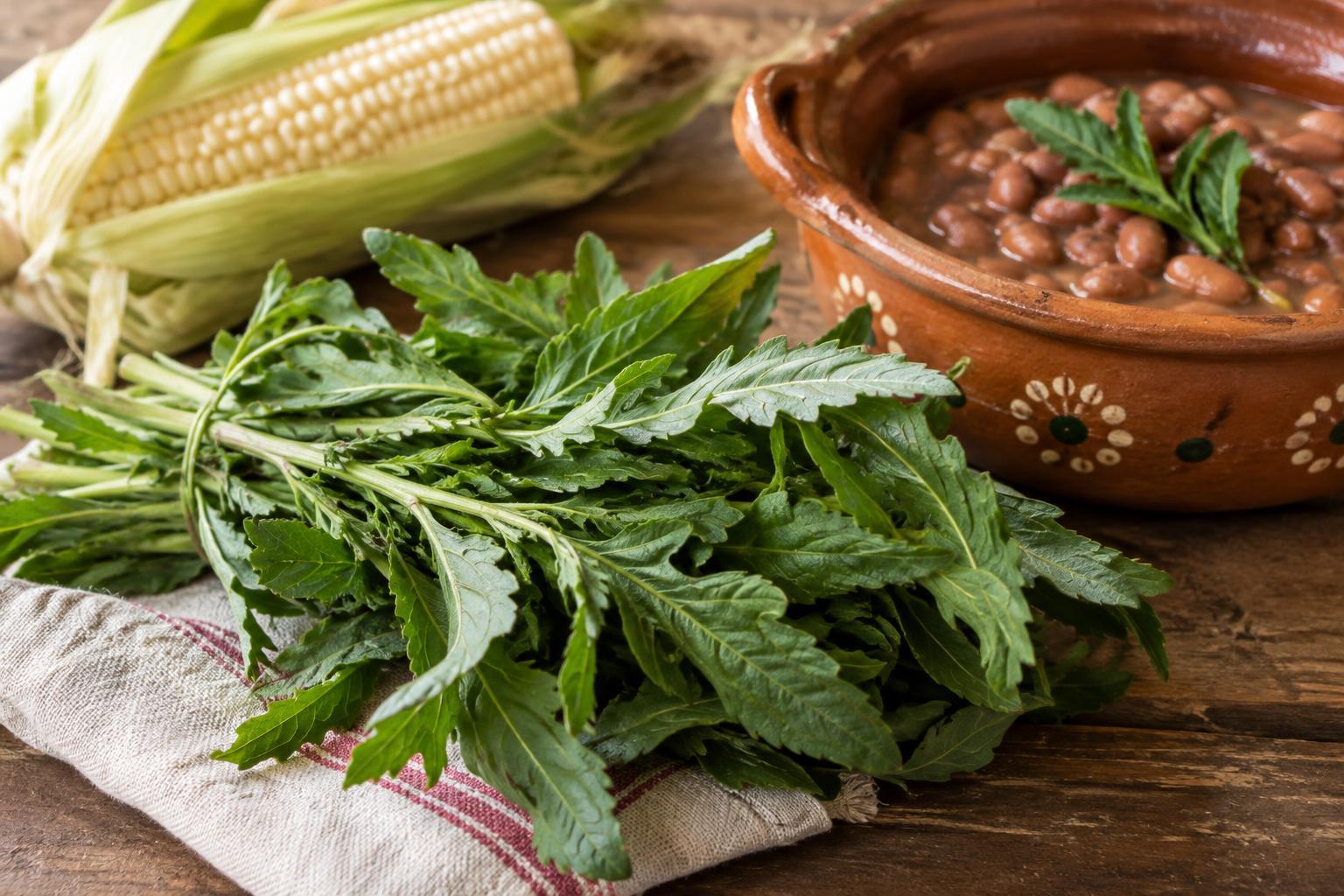
Fresh epazote has green leaves that are often elongated with uneven or toothed edges. Their size and shape can vary along the stem. The scent is a more useful kitchen clue than a photograph: gently rub a leaf and look for a strong, distinctive aroma rather than the sweet fragrance of mint or basil. Still, scent and leaf shape are not enough to identify a wild plant safely. For cooking, buy a labeled bunch from a food seller or use an herb you have grown from a reliably identified seed or plant.
Choose leaves that look lively rather than slimy or extensively yellowed. Tender leaves and thin stem tips are the easiest parts to cook with; thick, tough stems can be discarded. Rinse fresh epazote under running water, shake or pat it dry, and keep it loosely wrapped in the refrigerator. Use it while its aroma is still pronounced. Dried epazote is convenient, but its flavor may be less vivid, so smell it before adding more to a dish.
A light hand for a pot of beans
Epazote is at home in a pot of black, pinto or other beans. For a medium household pot, begin with one small fresh sprig, or a modest pinch of dried leaves. Simmer it with the beans until the flavor has had time to mingle, then taste the broth before deciding whether to add more. If you leave the sprig whole, you can lift out its stem before serving. When using dried leaves, rub them between your fingers as you add them so they disperse.
The herb works well alongside onion and garlic, but too many competing seasonings can obscure what it contributes. Start with beans, their cooking liquid and a few familiar aromatics; add salt to taste as the dish comes together. For canned beans, simmer the rinsed or undrained beans, depending on the broth you want, with a little water and epazote for several minutes. There is no need to use a large quantity to make its presence known.
Epazote is sometimes associated with claims about making beans easier to digest. Treat those claims cautiously rather than relying on the herb for that purpose. Its dependable role in the kitchen is flavor.
Using epazote with corn
Corn’s sweetness gives epazote a useful counterpoint. Try finely chopping a few tender leaves into warm corn kernels with sautéed onion, then taste before adding more. For an esquites-inspired bowl, finish the corn with lime, chile and your preferred creamy or crumbly topping. The epazote should register as a savory, herbal note without crowding out the corn and citrus.
You can also tuck a small sprig into a pot of corn soup or a corn-and-bean filling, removing the stem before serving. If you are making a filling for tortillas, cook the epazote with the warm ingredients rather than scattering a large amount of raw herb over the top. Heat softens its sharper edges. Start small in any new combination: you can add a little more chopped leaf, but you cannot easily remove it once it has been stirred through.
What to use when you cannot find it
Epazote has no exact substitute. Cilantro, oregano and mint each bring something different, and combining them will not reproduce its flavor. If a recipe uses only a small sprig, it is often better to omit the epazote and make well-seasoned beans or corn than to replace it with a large amount of another herb. Taste the finished dish and adjust its salt, chile or lime as appropriate.
Use epazote as a culinary seasoning, not as a concentrated preparation. Essential oil is not interchangeable with fresh or dried leaves, and adding extra herb is not a shortcut to deeper flavor. A restrained amount lets this distinctive ingredient make beans and corn more interesting while keeping the dish balanced.