A make-ahead coastal dish
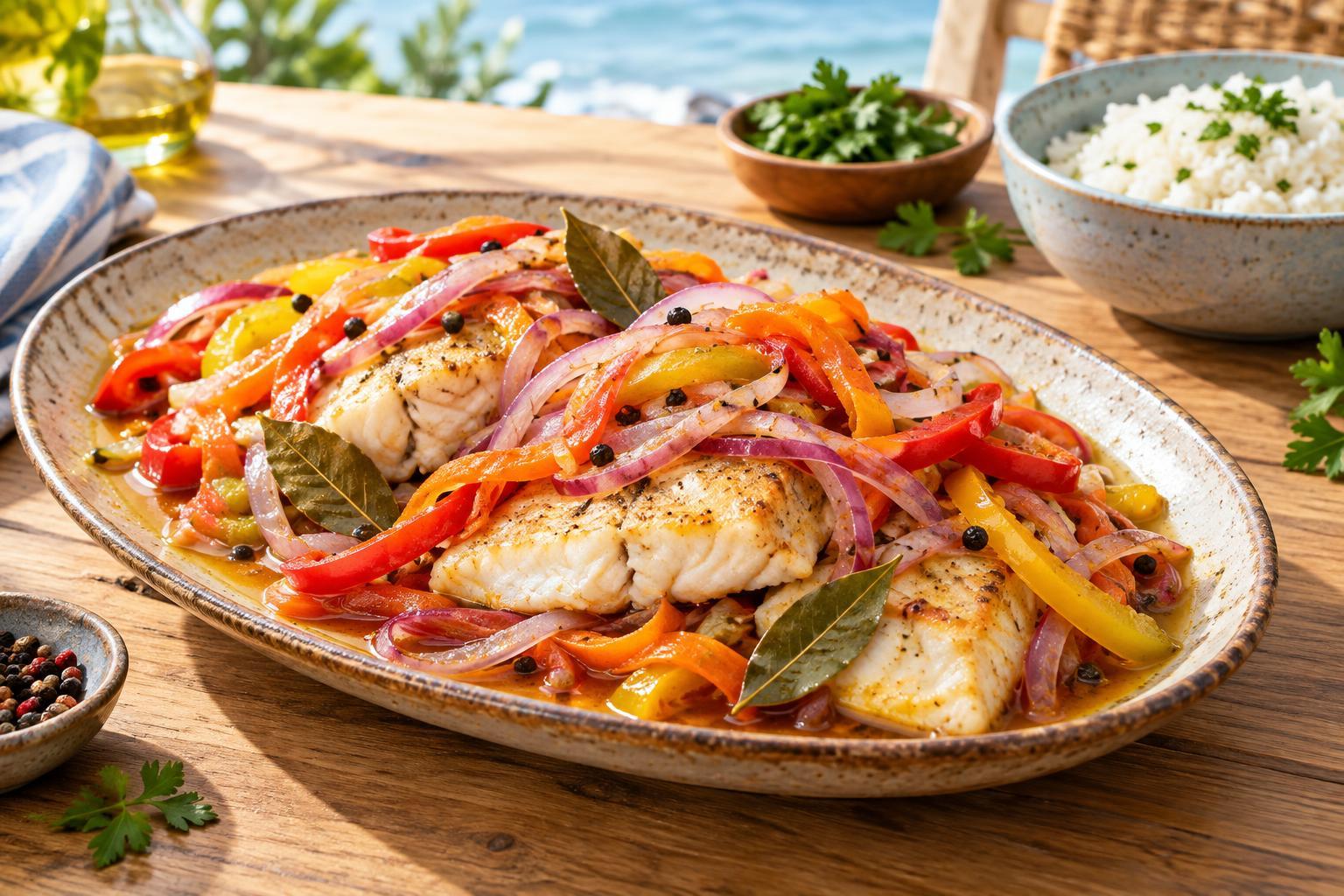
Escabeche pairs cooked fish with vegetables and a tangy vinegar dressing. Versions vary across coastal Latin American kitchens, but the appeal is easy to recognize: the fish is satisfying, the vegetables add color and crunch, and the tart dressing keeps each bite lively. It is well suited to a lunch spread or a dinner prepared ahead of time.
This version uses firm white fish, onions, peppers and carrots. It is designed to be chilled briefly before serving, not stored at room temperature. The vinegar brings flavor; it does not turn the dish into a shelf-stable preserve. Choose a shallow, nonreactive dish or lidded container so the dressing can reach the fish without breaking it apart.
Gather the fish and vegetables
For four servings, use about 1½ pounds of boneless white fish fillets, such as cod, snapper or another firm fish available to you. Have ready one medium onion, thinly sliced; one bell pepper, sliced into strips; and one medium carrot, cut into thin matchsticks. For the dressing, use ½ cup white wine vinegar, ½ cup water and 3 tablespoons olive oil, plus two sliced garlic cloves, one bay leaf, salt and black pepper. A small pinch of sugar is optional if the vinegar tastes especially sharp.
Cut the fish into serving-size pieces and pat them dry. Keep raw fish chilled until you are ready to cook, and use a separate board or wash utensils and surfaces thoroughly before they touch the cooked fish or ready-to-eat vegetables. Thin vegetable slices soften quickly and are easier to arrange over the fillets. If you want some heat, add a few slices of fresh chile to the dressing.
Cook, dress and chill
Season the fish lightly with salt. Heat a little oil in a skillet over medium heat and cook the fillets in batches, turning carefully, until the thickest part reaches 145°F. Cooking time will depend on thickness, so a food thermometer is more reliable than the clock. Transfer the cooked fish to a clean, shallow dish in a single layer or with only slight overlap.
In the same skillet, add the onion, pepper and carrot with another small splash of oil if needed. Cook for a few minutes, stirring, until the vegetables begin to soften but still hold their shape. Add the garlic for the final minute. Pour in the vinegar and water, add the bay leaf and bring the mixture to a gentle simmer. Cook for about five minutes, then taste the liquid with a clean spoon. Add salt, pepper or the optional pinch of sugar as needed. The dressing should taste distinctly tangy because its flavor will mellow alongside the fish.
Spoon the warm vegetables and dressing over the cooked fillets. Let the dish stop steaming, then cover and refrigerate promptly; do not leave it out for more than two hours. Chill for at least a couple of hours to let the flavors mingle. The fish may become firmer as it sits in the acidic dressing, so handle it gently when serving.
Serve it safely and make it your own
Serve escabeche chilled or let individual portions lose their refrigerator chill briefly before eating. Spoon plenty of vegetables and dressing over each piece of fish. Rice, boiled potatoes or a simple green salad make useful companions: each offers a mild contrast to the vinegar. Fresh herbs can go on just before serving rather than into the warm dressing.
For a different texture, lightly dust the fish with flour before pan-cooking, or cook it without coating for a cleaner-tasting dish. You can adjust the balance of onion, pepper and carrot, but keep the vegetables thinly sliced so they soften evenly. If the finished dish tastes too sharp, serve it with a starch rather than diluting the dressing after it has been poured over the fish.
Keep leftovers covered in the refrigerator and use them within two to three days. Discard portions left at room temperature for more than two hours. Unlike raw seafood dishes sometimes described as citrus-cured, this escabeche begins with fully cooked fish. Neither citrus juice nor vinegar makes raw seafood equivalent to cooked seafood; the acid in this recipe is a seasoning, not a substitute for cooking or refrigeration.