Why char the scallions?
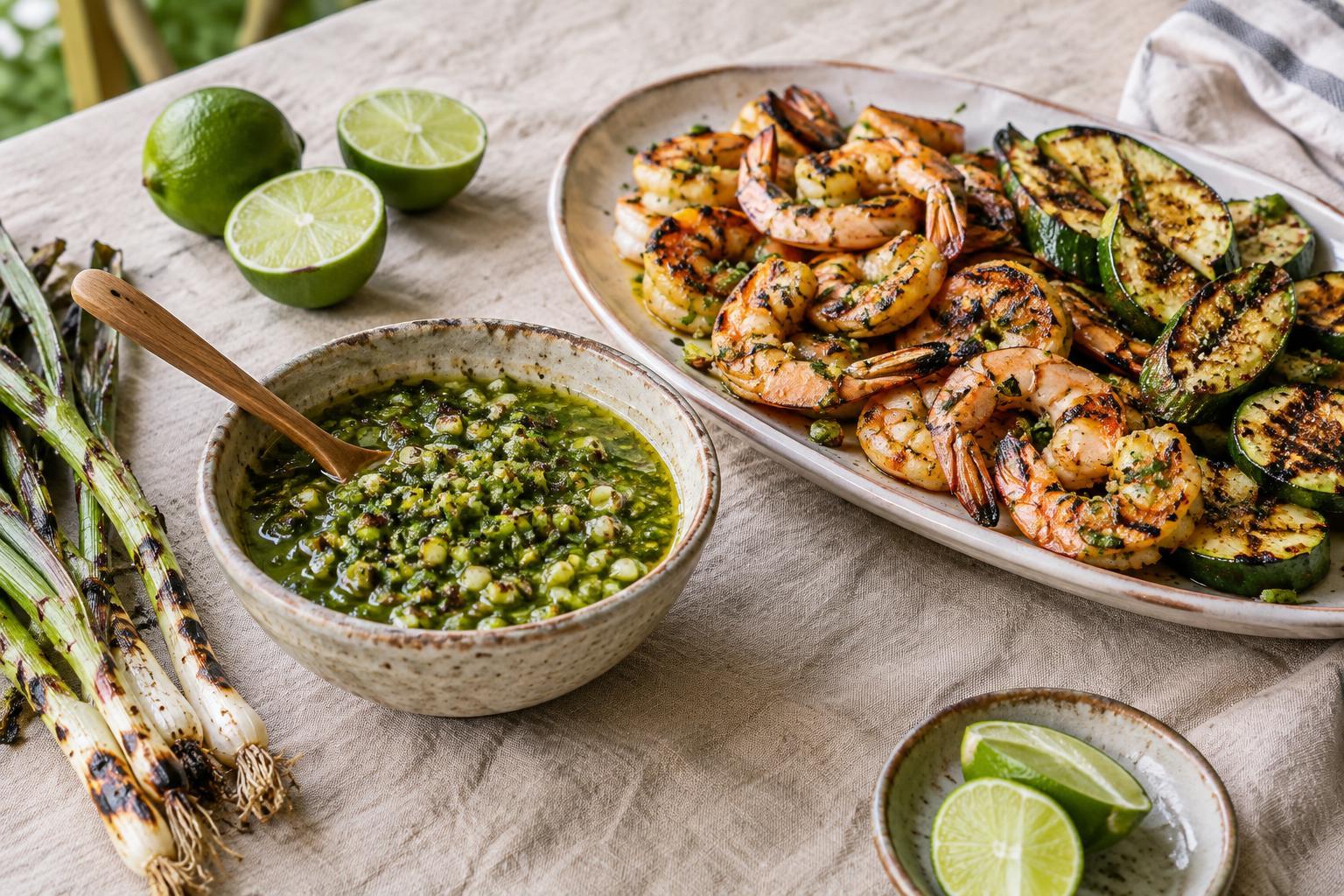
Scallions can do more than add a fresh garnish. Briefly charring them softens their raw onion bite and gives a lime-based sauce a savory depth without making it heavy. The result suits cooked shrimp or fish, but it is just as useful over grilled squash, corn, potatoes or a bowl of rice.
Aim for a sauce that is loose enough to spoon, with small pieces of scallion visible. It should taste tangy, mildly sweet from the cooked onion and rounded rather than oily. You do not need a grill: a dry skillet works well, and a broiler is another option if you watch the scallions closely.
Char, chop and mix
For a small bowl of sauce, start with one bunch of scallions, two tablespoons of lime juice, three tablespoons of olive oil and a pinch of salt. Have a little extra oil and lime juice nearby for adjustments. A small amount of finely chopped cilantro is optional; leave it out if you want the scallions to remain the main flavor.
Trim the root ends and remove any damaged outer leaves. Pat the scallions dry, then place them in a hot, dry skillet in a single layer. Turn them occasionally until they have dark spots and their firm white ends begin to soften. If the green tops brown faster than the whites, move them away from the hottest part of the pan. Let the scallions cool enough to handle, then chop them finely, including the tender green portions. Discard any sections that have become brittle or taste unpleasantly burnt.
Stir the chopped scallions with the lime juice and salt, then mix in the oil. For a more cohesive sauce, whisk vigorously or pulse the mixture briefly in a small food processor. Avoid blending it completely smooth unless you prefer a purée: a little texture makes it easy to distribute the scallions across a plate. Taste on a piece of the food you plan to serve, not just from a spoon. A sauce that seems very tart by itself may be balanced alongside a rich piece of cooked fish.
Adjust the sauce to the dish
If the sauce tastes sharp, add oil a teaspoon at a time and check whether it also needs a little more salt. If it tastes flat, try a small squeeze of lime before adding more salt. If the charred flavor dominates, fold in a finely chopped fresh scallion green or a little cilantro. These small adjustments are easier to control than adding a large amount of any ingredient at once.
For cooked shrimp, keep the sauce fairly loose so it can coat each piece without clumping. For a firm cooked fish fillet, leave it chunkier and spoon it over the top just before serving. Over roasted vegetables, a slightly more acidic version can provide contrast to their sweetness. You can also add a finely chopped fresh chile for heat, starting with a little so it does not overwhelm the scallions.
Make the sauce separately from the seafood. That lets you taste and adjust it without introducing raw seafood juices, and it keeps the lime flavor fresh. The lime in this sauce is for flavor, not for making raw seafood safe to eat: citrus curing does not make raw seafood equivalent to cooked seafood.
Serve and store with care
Spoon the sauce onto cooked seafood just before it reaches the table, or set out a small serving bowl with a clean spoon. If you are cooking several batches, keep the sauce away from plates, utensils and surfaces that have touched raw seafood. Use a clean utensil to portion out only what you expect to serve, rather than returning sauce from the table to the main container.
The sauce is brightest soon after mixing. If making it ahead, refrigerate it promptly in a covered container and stir it before serving; the oil and lime juice may separate as it sits. Add any delicate fresh herbs close to serving time. Keep the sauce chilled until needed, especially when serving it with seafood, and discard portions that may have been contaminated by contact with raw ingredients.