What makes moqueca so welcoming
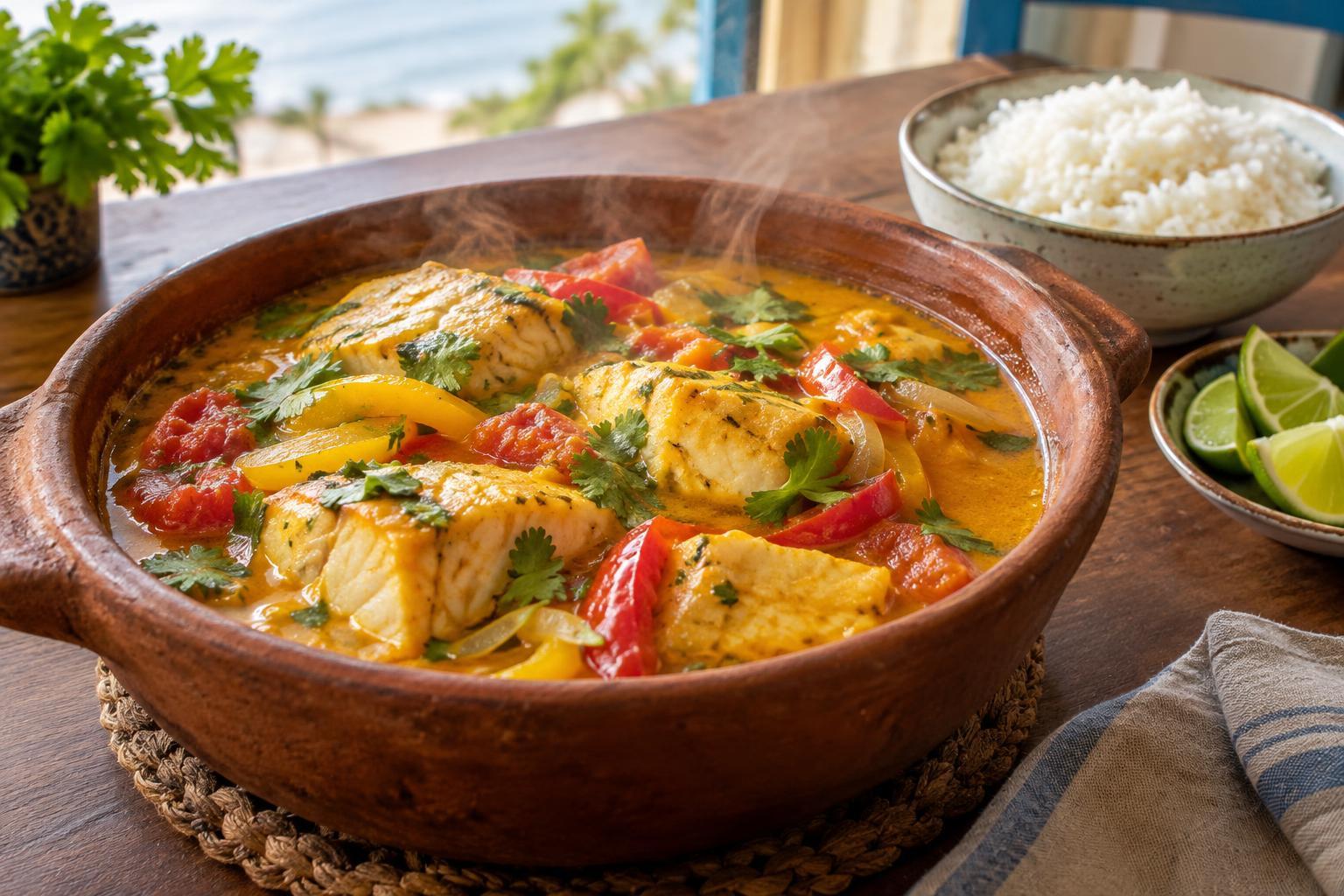
Moqueca is a Brazilian seafood stew with regional variations. This version takes inspiration from coconut-rich styles often associated with Bahia: fish cooks gently in a fragrant broth of peppers, tomatoes, onion and coconut milk. It is a good dish for beginners because the ingredients do much of the work. Once the vegetables soften and the broth comes together, the fish needs only a short simmer.
There is no need to treat one recipe as the only way to make moqueca. Some versions use dendê, or red palm oil, for its distinctive color and flavor; others use different fats or omit coconut milk. Here, a small amount of dendê is optional. The goal is a balanced home-cooked stew that lets the fish remain tender and the peppers taste fresh.
Choose fish that will hold together
For four servings, start with about 1¼ pounds of boneless firm white fish, such as cod, halibut or another mild fish available to you. Cut it into large, fairly even pieces. Thick pieces are easier to lift from the pot without breaking. If the fish is frozen, thaw it in the refrigerator before cooking rather than leaving it on the counter.
Keep seafood refrigerated until you are ready to use it, and prevent its juices from touching ready-to-eat ingredients. Wash your hands, knife and cutting board after preparing raw fish. A little lime juice can brighten the stew, but it does not make raw seafood equivalent to cooked seafood: citrus changes the fish’s texture without providing the same heat treatment. This recipe cooks the fish fully.
Build the pepper and coconut broth
Gather one large onion, two bell peppers in different colors, two medium tomatoes and three garlic cloves. Slice the onion and peppers, chop the tomatoes and mince the garlic. You will also need one 13- to 14-ounce can of unsweetened coconut milk, one tablespoon of neutral oil, salt and a lime. If you like, set out a handful of cilantro and one to two teaspoons of dendê for finishing. Choose unsweetened coconut milk meant for cooking, not a sweetened coconut drink.
In a wide pot or deep skillet, warm the neutral oil over medium heat. Add the onion and peppers with a pinch of salt and cook, stirring occasionally, for about eight minutes, until they begin to soften. Add the garlic and tomatoes and cook for another three to five minutes, until the tomatoes release some juice. Pour in the coconut milk and stir gently. If the mixture seems too thick to surround the fish, add a small splash of water. Bring it to a gentle simmer, then taste the broth and adjust the salt.
The broth should be savory, lightly sweet from the peppers and coconut, and loose enough to spoon over rice. If you want more heat, add a little minced fresh chile with the garlic or serve hot sauce at the table. Keeping the heat adjustable makes the stew easier to share.
Cook the fish gently
Season the fish lightly with salt. Nestle the pieces into the simmering broth in a single layer, spooning a little liquid over the top. Cover the pot and keep the heat low enough for gentle bubbling, not a rolling boil. Depending on thickness, the fish may take roughly eight to twelve minutes. Rather than relying on time alone, check the thickest piece with a food thermometer: it should reach 145°F (63°C). Avoid stirring vigorously, which can break up the fish.
Turn off the heat and add a squeeze of lime. If using dendê, stir in a teaspoon at a time and taste before adding more; its flavor can be pronounced. Scatter cilantro over the pot if you enjoy it. Lime goes in at the end so its brightness remains noticeable alongside the warm, mellow coconut broth.
Serve simply and handle leftovers well
Spoon moqueca into shallow bowls with rice to catch the broth. A crisp green salad or simply cooked vegetables make useful contrasts to the soft fish and peppers. Offer extra lime wedges at the table so each person can adjust their bowl.
Refrigerate leftovers promptly in shallow, covered containers; do not leave the stew at room temperature for more than two hours, or one hour in very hot conditions. Reheat gently until hot throughout, taking care not to boil the fish into flakes. Moqueca is most appealing when freshly made, so for a first attempt, consider preparing the vegetables ahead and cooking the fish shortly before serving.