A layered dish built around potatoes
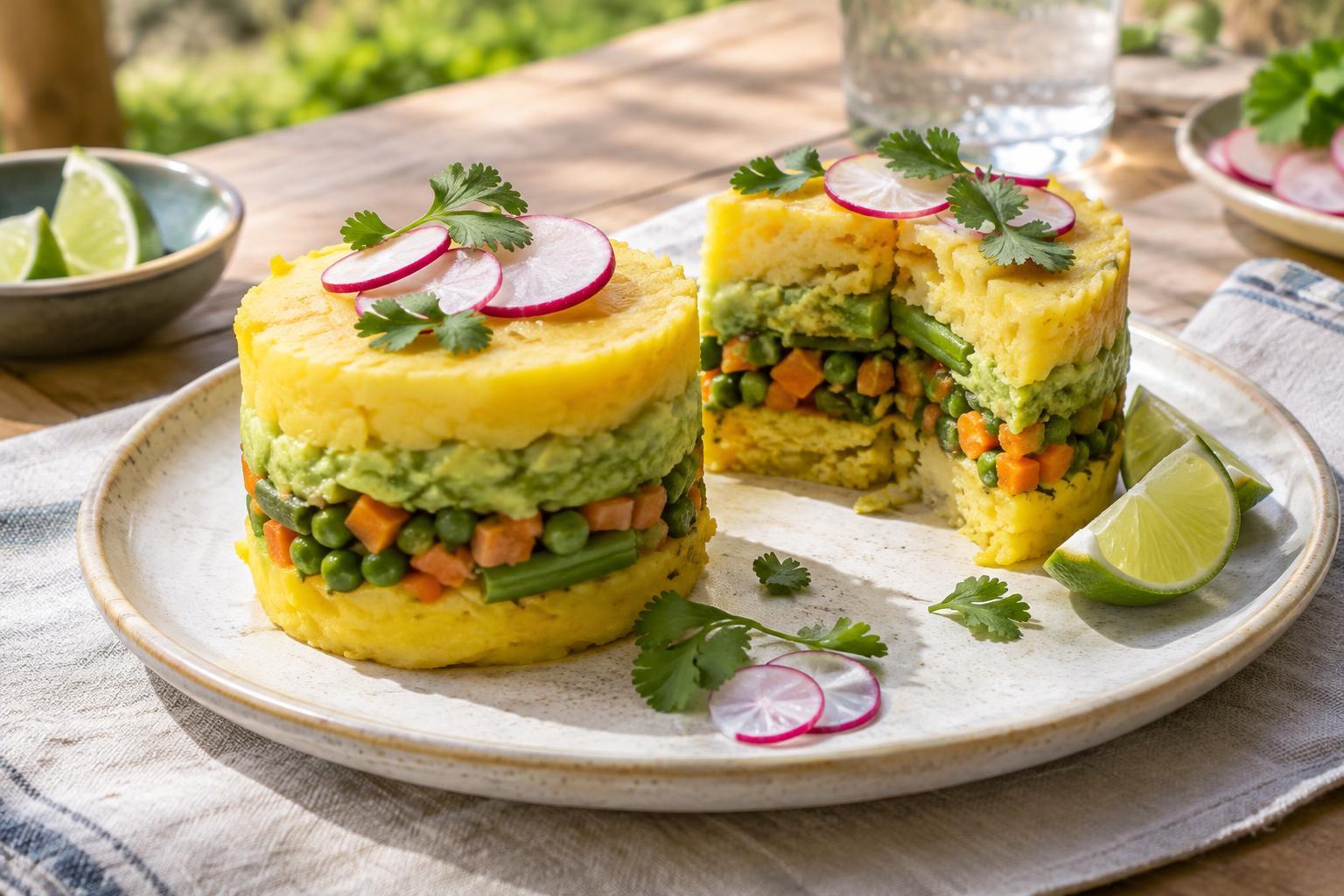
Causa is a Peruvian layered potato dish that lends itself to many fillings. In this vegetable version, lime-seasoned mashed potatoes hold a center of avocado and cooked vegetables. Serve it as a substantial side or a light lunch alongside a crisp salad. Its appeal comes from contrast: smooth potatoes, creamy avocado, tender vegetables and a bright finish.
For four to six servings, start with about two pounds of yellow potatoes. Have two to three limes, two tablespoons of neutral oil, salt and, if you like, a little ají amarillo paste ready for the potato mixture. For the filling, use two ripe but firm avocados and about two cups of cooked vegetables. Peas, carrots, green beans and corn all work well; choose a combination that gives each bite some color and texture.
Make a potato mixture that holds its shape
Peel the potatoes, cut them into similar-size pieces and simmer them in salted water until a fork passes through easily. Drain thoroughly, then mash or pass them through a ricer while warm. Avoid a blender or food processor, which can turn potatoes gluey. Let the mash cool until it is comfortable to handle before adding lime juice and oil.
Begin with the juice of one lime, the oil and a generous pinch of salt. Add ají amarillo paste a little at a time if using it: the paste brings chile flavor as well as warmth, and brands can vary in intensity. Taste the potatoes before adding more lime. They should be noticeably tangy but still taste like potatoes. If the mixture seems too soft to form a layer, let it cool further rather than adding liquid. Divide it in half for the top and bottom layers.
Prepare a filling with distinct textures
Cook the vegetables until tender but not mushy. Blanch peas or green beans briefly, steam carrots, or use leftover cooked vegetables that have been stored safely. Drain everything well and let it cool. Excess moisture can seep into the potatoes and make the layers slide. Chop larger vegetables into small pieces so the causa slices cleanly.
Mash the avocado lightly with a fork, leaving a few small pieces for texture. Add a squeeze of lime and a little salt just before assembly. For a creamier vegetable filling, fold the cooled vegetables into a spoonful or two of mayonnaise, then taste for seasoning. This is optional: you can also leave the vegetables simply dressed with a little oil and lime. Keep the avocado and vegetables as separate layers, or gently combine them if you prefer a more unified center.
Layer, chill and serve
Line a loaf pan or small baking dish with parchment, leaving enough overhang to help lift out the causa. Press half the potato mixture into an even layer, taking care to reach the corners. Spread the avocado over it, then add the cooked vegetables. Cover with the remaining potato mixture and press gently to level the surface. You can also assemble individual portions in small dishes; they are easier to serve if you do not plan to unmold them.
Cover and refrigerate until the layers feel firm enough to cut, about an hour. Lift the causa out using the parchment and slice it with a clean knife, wiping the blade between cuts. Finish with herbs, thinly sliced radishes or a small squeeze of lime. Serve it cool rather than ice-cold so the potato and avocado flavors come through.
Plan ahead without sacrificing freshness
You can cook and mash the potatoes and prepare the vegetables ahead of assembly. Refrigerate both promptly in covered containers, keeping the avocado whole until you are ready to layer; cut avocado gradually browns after exposure to air. Once assembled, keep the causa refrigerated at 40°F (4°C) or below and serve it within a day for the best texture and color.
If bringing it to a gathering, transport it in a cooler with ice packs and return leftovers to the refrigerator promptly. Do not leave it at room temperature for more than two hours, or more than one hour in very hot conditions. The recipe contains no seafood, but the same care with chilling matters for any perishable filling you might use. Citrus adds flavor; it is not a substitute for cooking seafood or for safe cold storage.