A bright side built around contrast
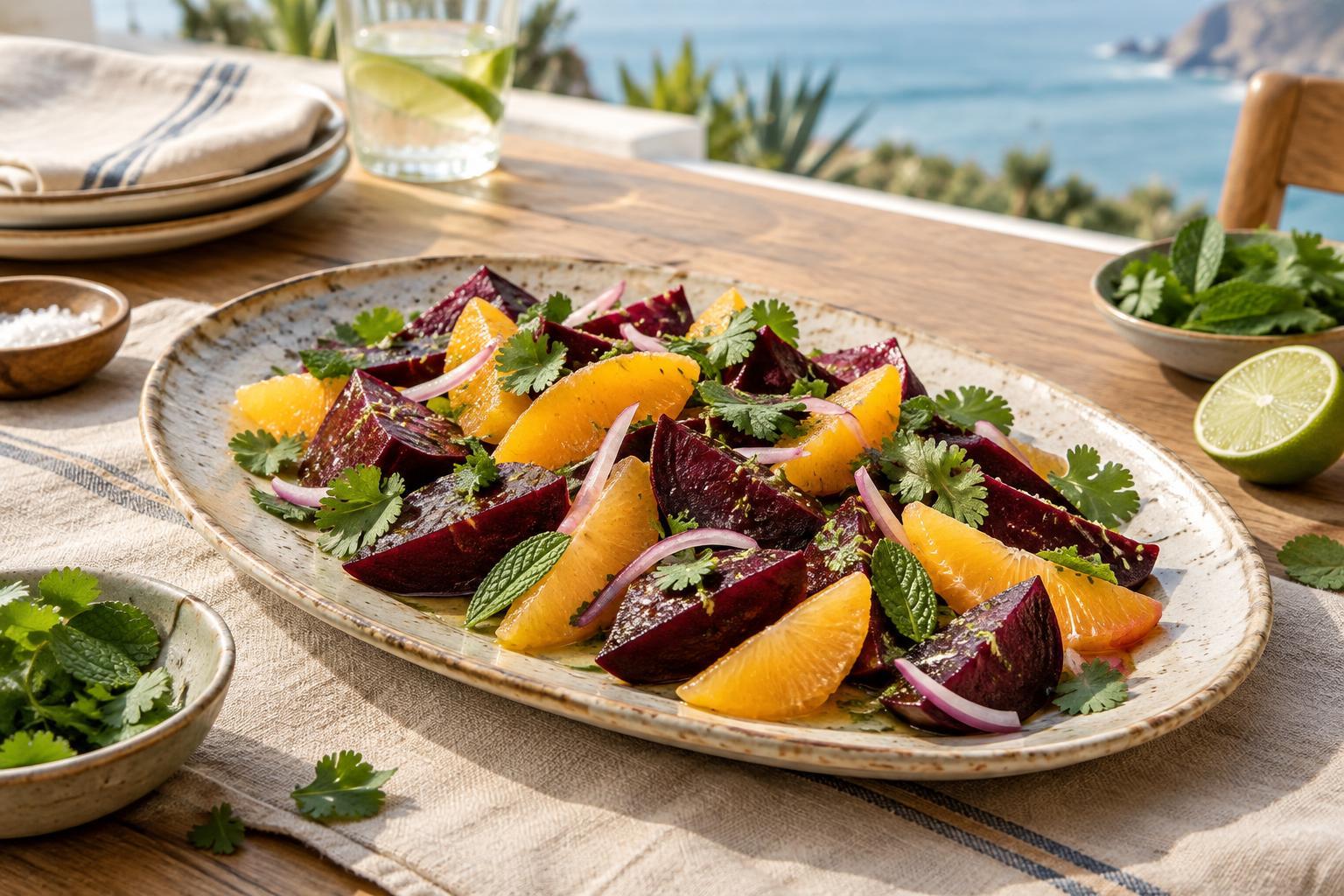
This Peruvian-style beet and orange salad brings together earthy sweetness, juicy citrus and a sharp lime dressing. It takes inspiration from flavors often used in Peruvian cooking rather than claiming to be a traditional recipe. Serve it beside grilled fish, roast chicken or a spread of vegetable dishes, where its color and acidity can balance richer plates.
For about four side servings, gather three medium beets, three oranges, a small red onion, one lime, olive oil, salt and a handful of cilantro. If you like gentle heat, add a little ají amarillo paste to the dressing, tasting as you go. The most important choice is not an ingredient but the order of preparation: keep the beets away from the orange flesh until the last moment.
Cook and cool the beets ahead
Scrub the beets well under running water. Cook them whole, with their skins on, by simmering them in water or roasting them in a covered dish until a knife slides easily into the center. Cooking time will vary with their size. Let them cool enough to handle, then rub or peel off the skins and cut the beets into small wedges. A washable board, a separate knife and an apron can spare your work area from beet juice.
You can do this step ahead. Put the cooked wedges in a covered container and refrigerate them promptly rather than leaving them out while you prepare the rest of the meal. For an even cleaner final assembly, toss the beets with a little olive oil, lime juice and salt in their own container. The light coating gives them flavor, while the container catches any juice they release. It will not seal in their color completely, so keep them separate from the citrus.
Prepare the oranges without turning them pink
Use a clean board and knife for the oranges. Slice off the peel and white pith, then cut the fruit into rounds or segments, removing any seeds. Catch the juice in a separate bowl; it can go into the dressing. If preparing the oranges ahead, cover and refrigerate them in their own container. Do not stack them under the beets or pour the beet dressing over them in advance.
Thinly slice the red onion and, if you prefer a milder bite, rinse the slices briefly in cold water and drain them thoroughly. Whisk together about two tablespoons of olive oil, one tablespoon of lime juice and a spoonful of reserved orange juice. Season with salt and, if using it, a small amount of ají amarillo paste. Taste the dressing with a piece of orange before adding more lime: the fruit may already be quite tart.
Assemble just before serving
Arrange the orange pieces on a platter first, leaving space between them. Set the beet wedges alongside and between the oranges rather than piling them on top. Scatter over the drained onion and cilantro, then spoon the dressing lightly across the salad. If the beets have collected a lot of liquid, lift them out with a spoon instead of pouring that liquid onto the platter. This keeps the orange flesh distinct, even though a few pink edges are part of the dish’s appeal.
For a buffet, you can take the separation a step further: arrange the beets and oranges in neighboring sections and offer the dressing on the side. Guests can mix them on their plates. Whether you serve the salad this way or fully assembled, use clean utensils and keep it chilled until serving. If it accompanies seafood, keep the salad and its utensils separate from raw seafood and the surfaces used to prepare it. Citrus adds flavor to seafood, but citrus curing does not make raw seafood equivalent to cooked seafood.
Adjust the salad to suit the meal
A few toasted pumpkin seeds add crunch, while extra cilantro makes the salad more herb-forward. For a less sweet version, use more lime in the dressing or add a little more onion. Make those adjustments after tasting the prepared oranges, since their sweetness and acidity vary. If you cannot find ají amarillo paste, leave it out; the salad still has plenty of character from the beets, oranges and lime.
The best make-ahead plan is simple: cook and dress the beets, prepare and chill the oranges separately, and keep the herbs dry until serving. Set out the components only when you are ready to assemble. You get the convenience of advance preparation without losing the contrast that makes the salad inviting.