A bright coastal supper with room to adapt
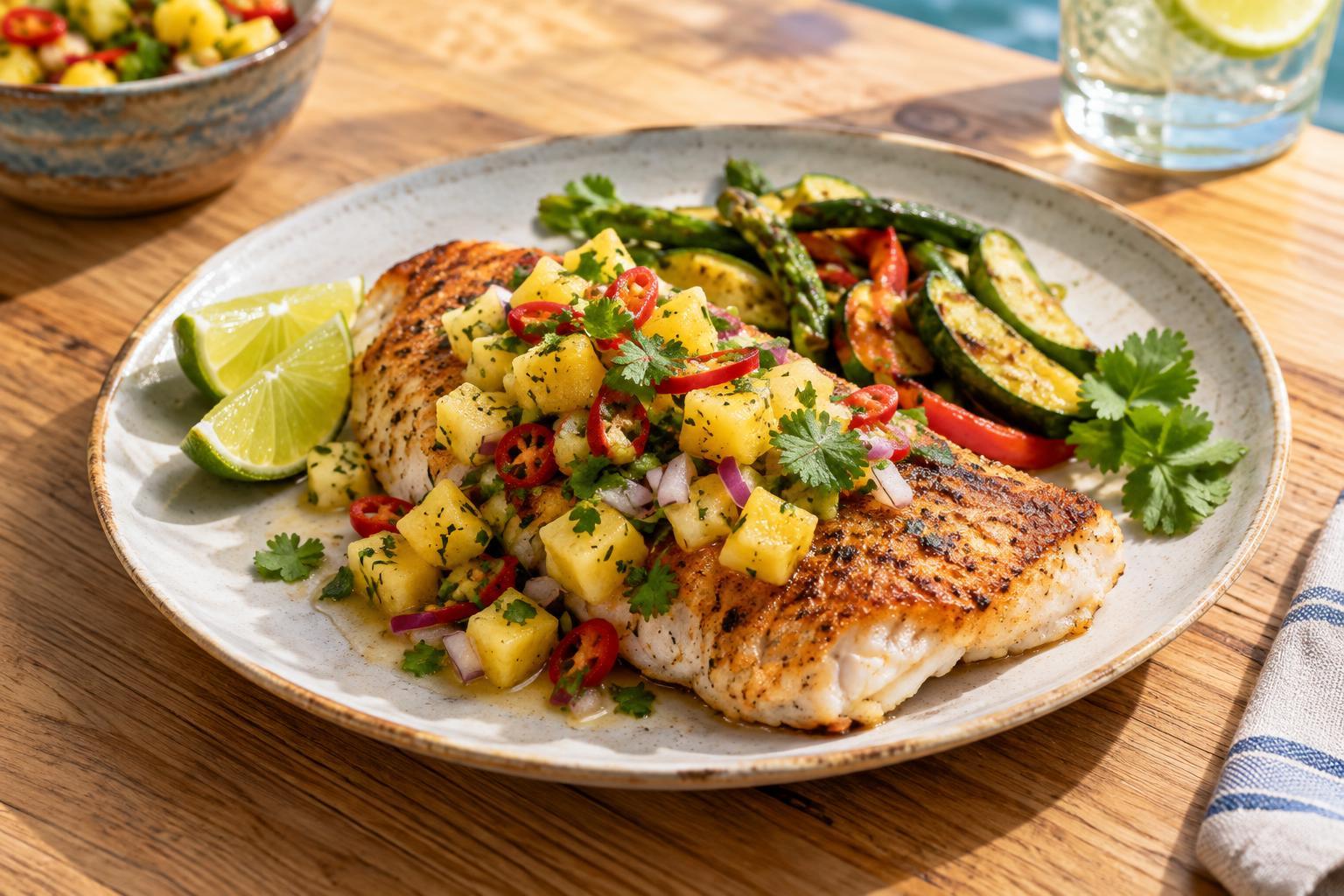
This dish pairs simply seasoned fish with a fresh salsa of pineapple, chile, onion and lime. The fish gets its color from the pan rather than a heavy coating, so the salsa can do the lively work: sweetness from the fruit, a little heat and enough acidity to lift each bite. Serve it with rice, warm tortillas or a plate of beans for a flexible weeknight meal.
For four servings, choose about 1½ pounds of boneless fish fillets, such as snapper, mahi-mahi or another firm white fish available to you. Similar-sized pieces are easier to cook evenly. Skin-on fillets work too; start them skin-side down and allow extra time on that side. You will also need salt, about 2 tablespoons of neutral oil and, if you like, a small pinch of ground cumin for the fish.
Mix the salsa before heating the pan
Dice about 1½ cups of fresh pineapple into small, spoonable pieces. Combine it with ¼ cup finely chopped red onion, one finely chopped fresh chile, a small handful of chopped cilantro and the juice of one lime. Add a pinch of salt, stir and taste. If the pineapple is especially tart, use a little less lime; if it is very sweet, another squeeze may help. For less heat, remove the chile’s seeds and inner ribs before chopping, or start with half a chile.
Make the salsa in a clean bowl, away from the raw fish and its preparation area. It can wait in the refrigerator while you cook, but its texture is best when the pineapple is freshly cut. Set aside a few lime wedges for serving rather than pouring extra juice over the fish before searing. A wet surface makes browning harder.
If fresh pineapple is unavailable, drained canned pineapple can work. Pat it lightly with a clean towel before mixing so the salsa does not become watery. The result will usually be softer and sweeter; adjust the lime and chile after tasting rather than following a fixed amount.
Sear the fish without crowding it
Keep the fish refrigerated until you are ready to cook. Pat the fillets dry with paper towels, then season both sides lightly with salt and, if using it, cumin. Wash your hands after handling raw fish, and keep its plate and utensils separate from the ready-to-eat salsa. If you use the same board for both, wash it thoroughly with hot, soapy water between tasks.
Heat a large skillet over medium-high heat, then add enough neutral oil to coat the bottom thinly. When the oil shimmers, lay the fish in the pan with space between the pieces. Cook in batches if necessary: crowding traps moisture and makes a golden surface less likely. Let the first side cook undisturbed until it releases readily from the pan and has good color, usually a few minutes depending on thickness. Turn with a thin spatula and finish cooking on the other side, lowering the heat if the exterior darkens too quickly.
Cooking time varies with the thickness and type of fish, so check the thickest part rather than relying on the clock. Fish should reach 145°F (63°C) on a food thermometer. It should also look opaque and separate easily into flakes, though appearance alone is less dependable than a temperature check. Transfer cooked fish to a clean serving plate, not the plate that held it raw.
Serve with contrast, not a long citrus soak
Spoon the salsa over the fish just before serving so the seared surface keeps some of its texture. Add lime wedges at the table and pair the plate with something mild that can catch the juices. Rice, roasted sweet potatoes or simply cooked black beans all give the bright topping a comfortable base. If you have leftover salsa, keep it refrigerated in a covered container and use it promptly; its texture will soften as it sits.
This recipe cooks the fish with heat. Lime juice belongs in the salsa and at the table for flavor, not as a substitute for cooking or careful handling. Citrus can change the appearance and texture of raw seafood, but citrus curing does not make raw seafood equivalent to cooked seafood. Keeping raw and ready-to-eat ingredients separate, cooking the fish thoroughly and serving it without unnecessary delay let the fresh flavors remain the focus.