What makes huancaína sauce creamy
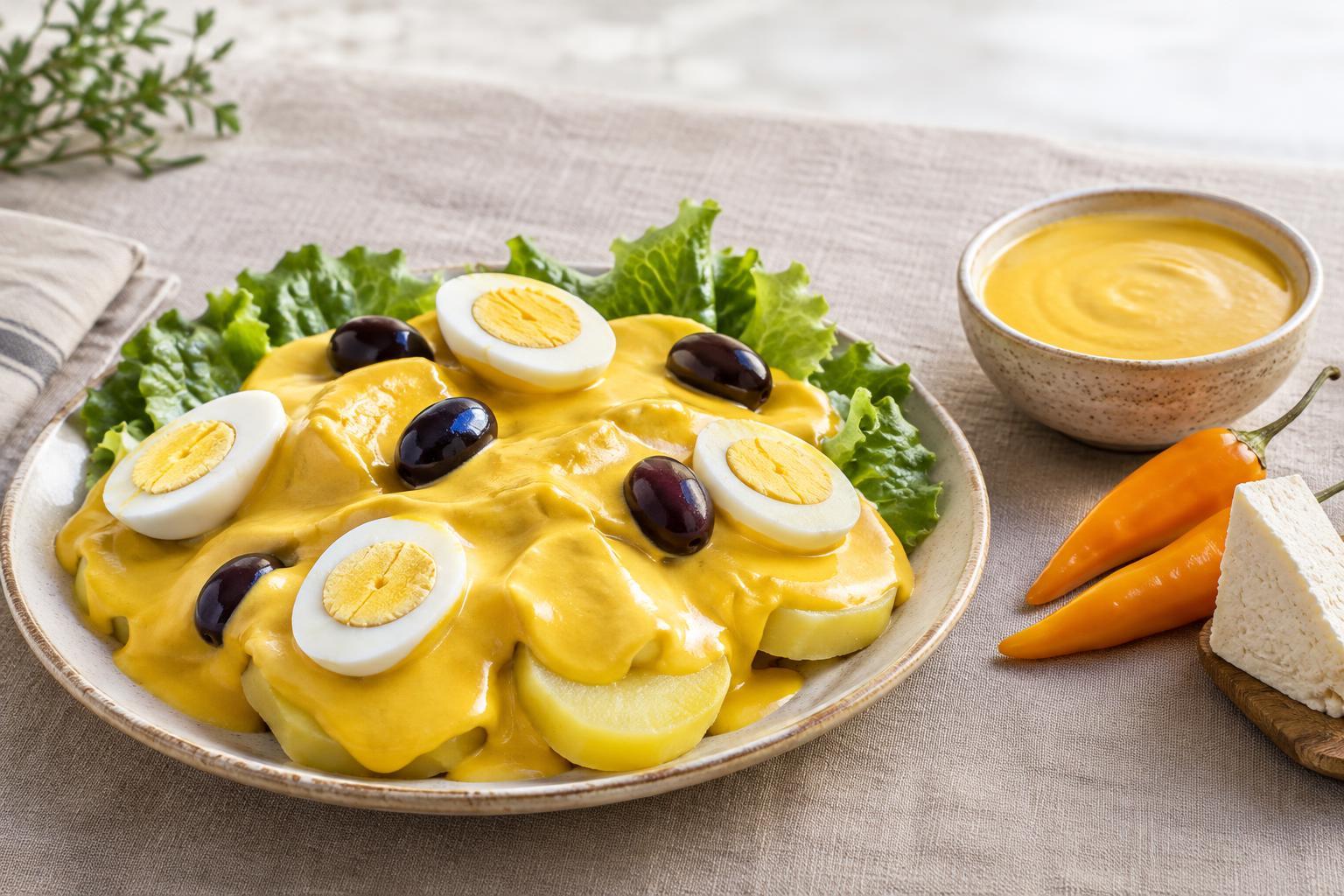
Salsa huancaína is a Peruvian sauce built around ají amarillo and fresh white cheese. It is often served over sliced boiled potatoes, but its savory, gently spicy flavor also suits vegetables and simply cooked seafood. Recipes vary: some use crackers or bread for body, while others rely more heavily on cheese. The goal here is a sauce that pours easily, coats a spoon and tastes of pepper rather than starch.
For a practical starting batch, gather about ½ cup ají amarillo paste, 7 ounces crumbled queso fresco, ½ cup evaporated milk, 2 plain crackers, 1 tablespoon neutral oil and a small garlic clove. Keep extra milk nearby for thinning. Choose a mild, crumbly fresh cheese rather than an aged, hard grating cheese; the latter is more likely to leave noticeable particles. Taste the paste before adding salt, since both paste and cheese can contribute seasoning.
Prepare the ingredients for a smoother blend
If you are using jarred ají amarillo paste, stir it before measuring. If you are using whole ají amarillo peppers, remove the stems and seeds, cook the peppers until tender, then blend them into a paste. Handling peppers can irritate skin and eyes, so wash your hands and utensils afterward. The heat can vary; starting with less paste makes it easier to adjust the finished sauce.
Crumble the cheese into small pieces so the blender does not have to break down large chunks. Break the crackers into the blender rather than dropping them in whole. Have the milk ready, but do not add all of it at once if your cheese is particularly moist. A little liquid helps the blades pull the ingredients into a smooth mixture; too much at the start makes it harder to judge the final thickness.
Blend in an order that prevents lumps
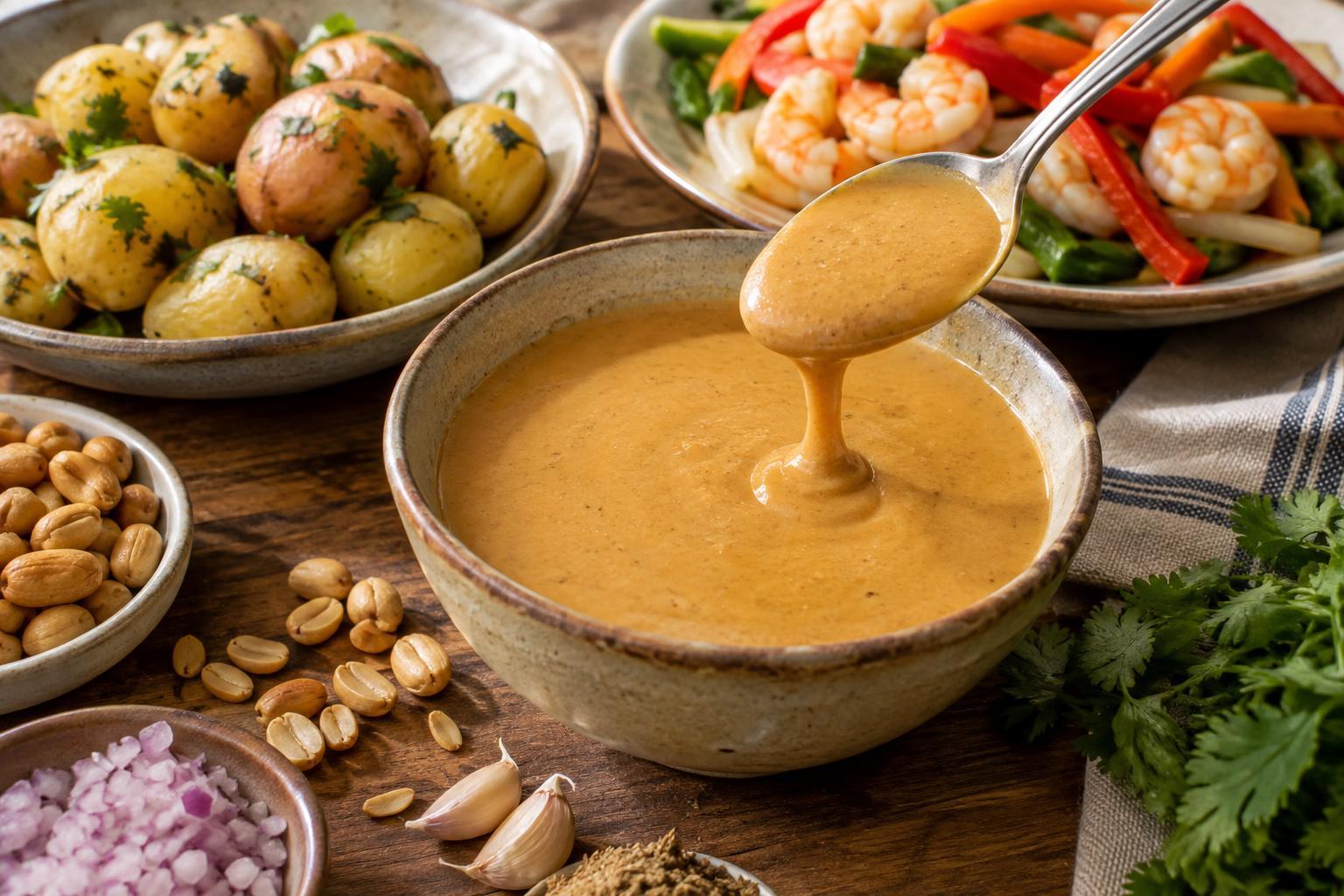
Add the ají amarillo paste, garlic, oil and about half the evaporated milk to the blender. Blend until the garlic is finely dispersed. Add the crumbled cheese in two or three additions, blending after each one. Stop the machine and scrape down the sides as needed. Once the cheese looks evenly incorporated, add the broken crackers and blend again until no visible pieces remain. Add more milk a tablespoon at a time until the sauce flows slowly from a spoon.
Give the blender enough time to do its work, but pause if the mixture warms noticeably. A high-speed blender may produce a silkier result than a small food processor; either can make a good sauce if the ingredients are broken down before blending. For an especially fine texture, pass the finished sauce through a sieve. Do not force a very thick mixture through it—thin the sauce slightly first so it moves through without leaving most of the cheese behind.
Adjust flavor and rescue the texture
Taste the sauce after blending. Add a little more ají amarillo for pepper flavor, or a splash of milk if it tastes too concentrated. If it needs brightness, add a few drops of lime juice and taste again; too much can dominate the cheese. Season with salt only after those adjustments. The sauce may thicken as it sits, particularly when made with crackers, so check its consistency again just before serving.
If the sauce is lumpy, add a spoonful of milk and blend longer, scraping down the sides. Graininess may come from a dry cheese that does not fully break down; straining can help, though a different cheese may work better next time. If the sauce is thin, blend in a little more crumbled cheese or a small piece of cracker, then wait a few minutes before making another adjustment. Adding too much cracker at once can turn a pourable sauce into a paste.
Serve it with care
For a classic-style plate, spoon the sauce over cooled, sliced boiled potatoes and add lettuce or hard-boiled eggs if you like. It also works as a dip for roasted vegetables or as a finishing sauce for cooked shrimp or fish. Keep the blender, serving spoon and work surfaces clean, and use separate utensils for any raw seafood so its juices do not touch the finished sauce.
Because this sauce contains fresh cheese and milk, refrigerate it promptly in a covered container and serve it chilled or cool rather than leaving it on the table for an extended period. Stir and thin it with a little milk after chilling if needed. If you serve it alongside a citrus-dressed seafood dish, remember that citrus curing changes seafood’s texture but does not make raw seafood equivalent to cooked seafood; choose fully cooked seafood when you want a cooked option.