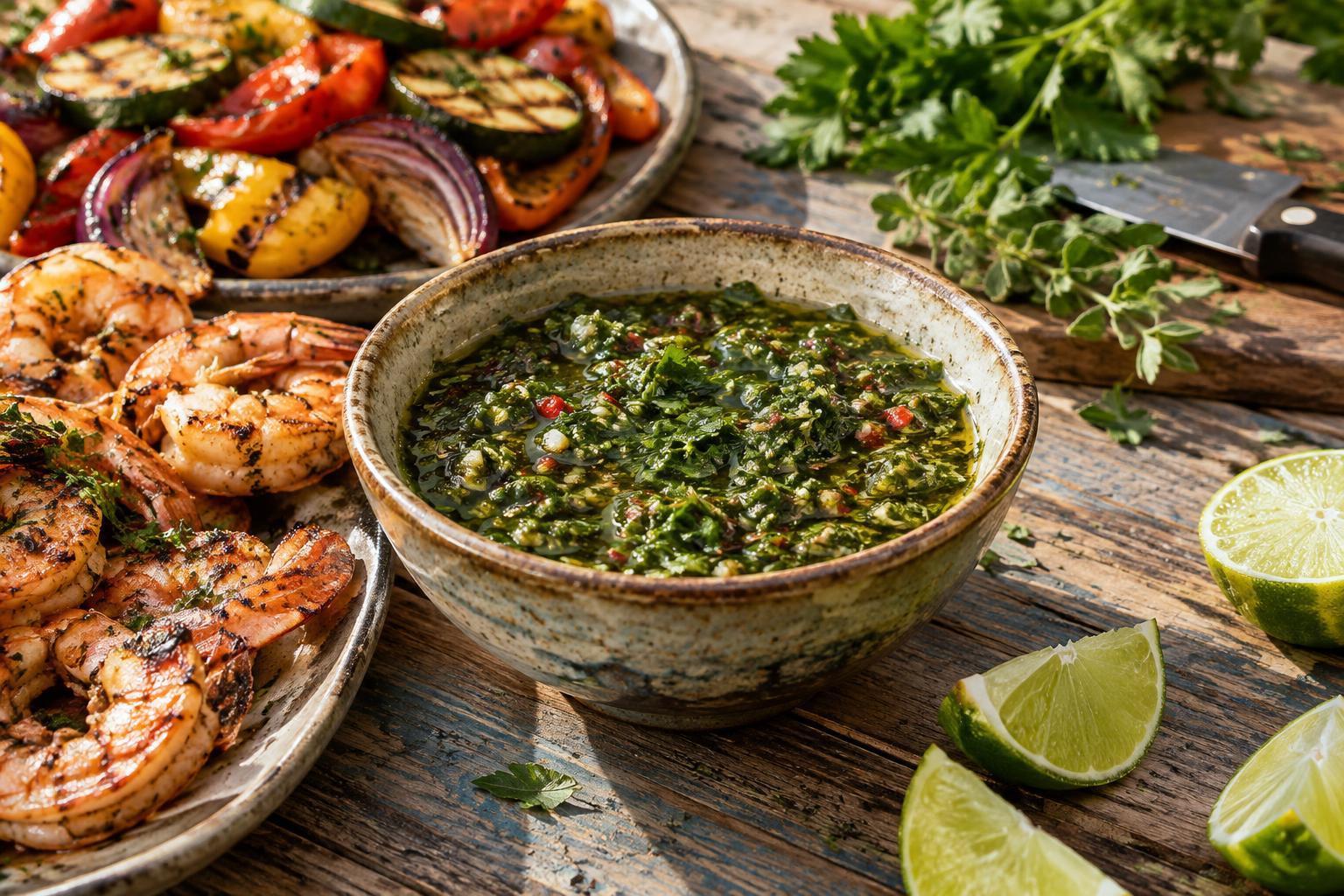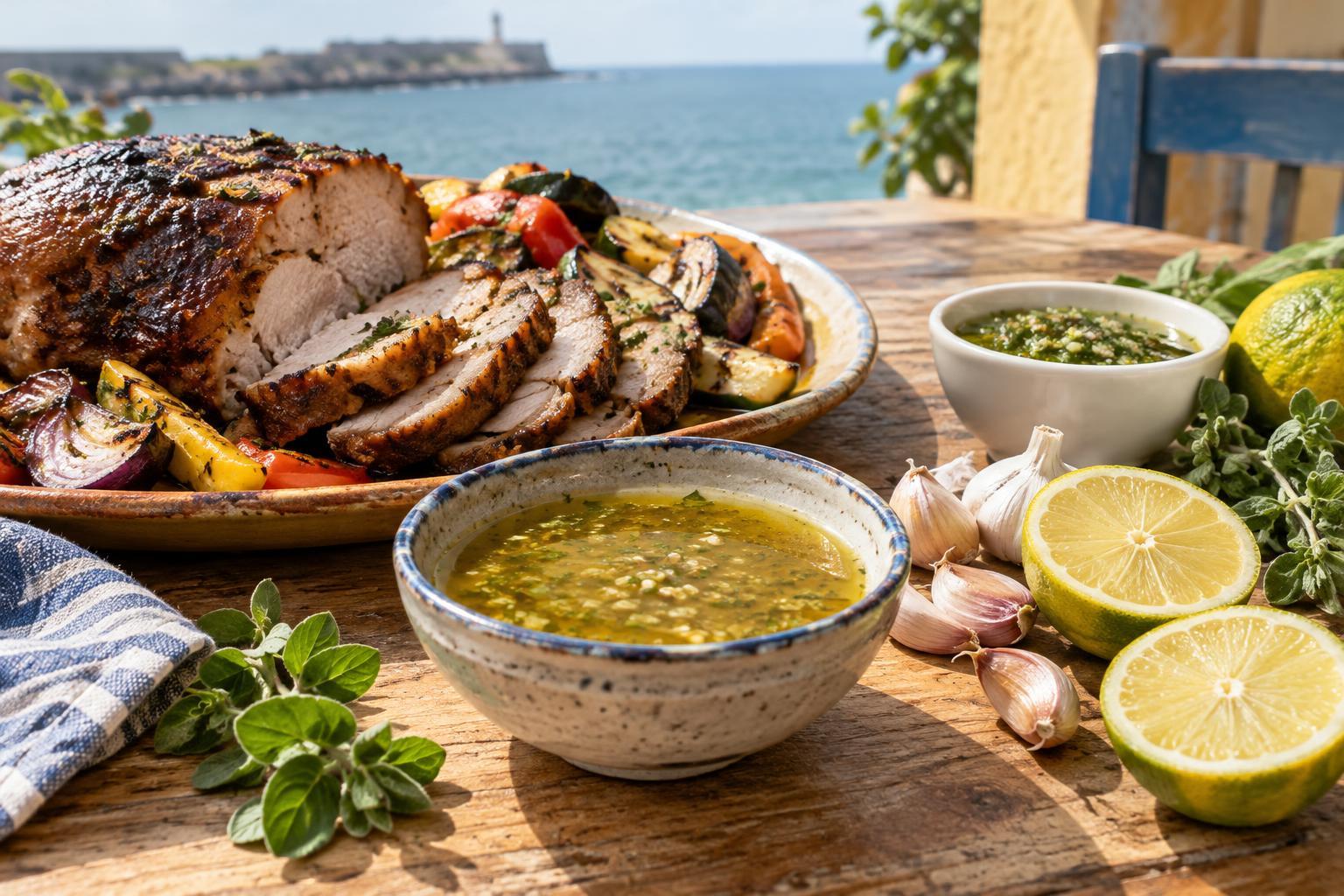
What makes mojo criollo distinctive
Mojo criollo is a citrus-forward Cuban sauce and marinade built around sour orange, garlic and oregano. Its appeal lies in contrast: sharp juice cuts through the richness of roasted or grilled food, while garlic and herbs add a savory backbone. Oil carries those flavors across the surface of the food and helps the mixture work as a finishing sauce.
There is no need to make every batch taste exactly alike. Sour oranges vary, and cooks adjust the garlic, herbs and salt to suit the dish. Aim for a sauce that tastes lively rather than harsh: you should notice citrus first, followed by garlic and oregano. Used as a marinade, mojo adds flavor to food that will be fully cooked; the citrus juice is not a substitute for cooking.
Build a balanced batch
For a practical starting point, combine ½ cup sour orange juice, 4 finely grated or minced garlic cloves, 1 teaspoon dried oregano, ½ teaspoon ground cumin, ½ teaspoon salt and ¼ cup olive oil. Cumin adds warmth, but you can use less if you want the orange and oregano to lead. Whisk the juice and seasonings together before whisking in the oil. Taste with a clean spoon and adjust the salt or citrus.
If sour oranges are unavailable, mix equal parts regular orange juice and lime juice to make the ½ cup of citrus juice. This is a useful kitchen substitute, not an exact match: regular orange brings sweetness, while lime supplies tartness. If the result tastes too sharp, add a little more orange juice; if it tastes flat, add lime a teaspoon at a time. Fresh juice generally gives you more control over the balance than a heavily sweetened bottled blend.
Let the mixed mojo stand briefly so the garlic and oregano can mingle with the juice. For a milder garlic flavor, gently warm the garlic in the oil over low heat, without browning it, then let the oil cool before combining it with the citrus. Warm oil and citrus can smell inviting, but keep any portion intended for marinating refrigerated rather than leaving it on the counter.
Marinate, then cook
Mojo suits pork, chicken and firm vegetables that can stand up to its bold flavor. Coat the food in a nonreactive container or sealed bag and refrigerate it while it marinates. Smaller cuts and vegetables need less time than a large roast; as a starting point, try about 30 minutes for vegetables or small pieces of meat and a few hours for larger cuts. Longer is not automatically better, since extended exposure to acid can soften the surface of some foods.
Lift the food out of the marinade and cook it using a method suited to the ingredient, such as roasting, grilling or pan-cooking. Use a food thermometer to check that meat or poultry reaches an appropriate safe internal temperature. Citrus may change the appearance or texture of raw food, but it does not make raw meat or seafood equivalent to cooked food. If you use mojo on fish or shrimp, cook the seafood thoroughly rather than relying on the juice to make it safe.
Keep the finishing sauce separate
A spoonful of fresh mojo at the table restores the bright citrus notes that can fade during cooking. Before adding any raw meat, poultry or seafood to your marinade, set aside a portion in a clean covered container. Use that untouched portion to dress the finished dish. Discard marinade that has been in contact with raw food; do not pour it over cooked food straight from the marinating container.
For an easy meal, pair mojo-roasted chicken with rice and a crisp cabbage salad, or spoon the reserved sauce over cooked vegetables just before serving. It is especially useful with starchy sides, where a little acidity can make the plate feel more balanced. Add it gradually and taste as you go: a finishing splash should brighten the food without overwhelming it.