Start with a savory base
Salsa de maní is an Ecuadorian peanut sauce that can be served with potatoes, vegetables, and other savory dishes. Recipes vary by household and by what the sauce accompanies, but the appeal is consistent: peanuts give it body and richness, while an aromatic base keeps it from tasting like plain peanut butter. Think of the method below as a flexible starting point rather than a single definitive version.
For about two cups of sauce, gather one small onion, two cloves of garlic, one tablespoon of neutral oil, about three-quarters of a cup of unsweetened roasted peanuts or smooth unsweetened peanut butter, and one and a half to two cups of water or unsalted broth. A little ground cumin and a pinch of annatto, if you have it, can add warmth and color. Milk is also used in some versions; if you choose it, replace part of the water with milk and heat the sauce gently. Check packaged peanuts and broth for added salt before seasoning.
Finely chop the onion and cook it in the oil over medium-low heat until soft, about five to eight minutes. Add the garlic and any spices for the last minute, stirring so they do not scorch. This step matters: softened onion gives the sauce a rounded savory flavor, while browned or burned garlic can make a mild peanut sauce taste bitter.
Blend first, then judge the thickness
If using whole peanuts, blend them with the cooked aromatics and about one cup of the liquid until the mixture is as smooth as your blender allows. Add a splash more liquid if the blades struggle. For peanut butter, whisk it into the warm aromatics with a small amount of liquid first, making a thick, smooth paste; then whisk in the remaining liquid gradually. Either route helps prevent dry lumps from hiding in a thin-looking sauce.
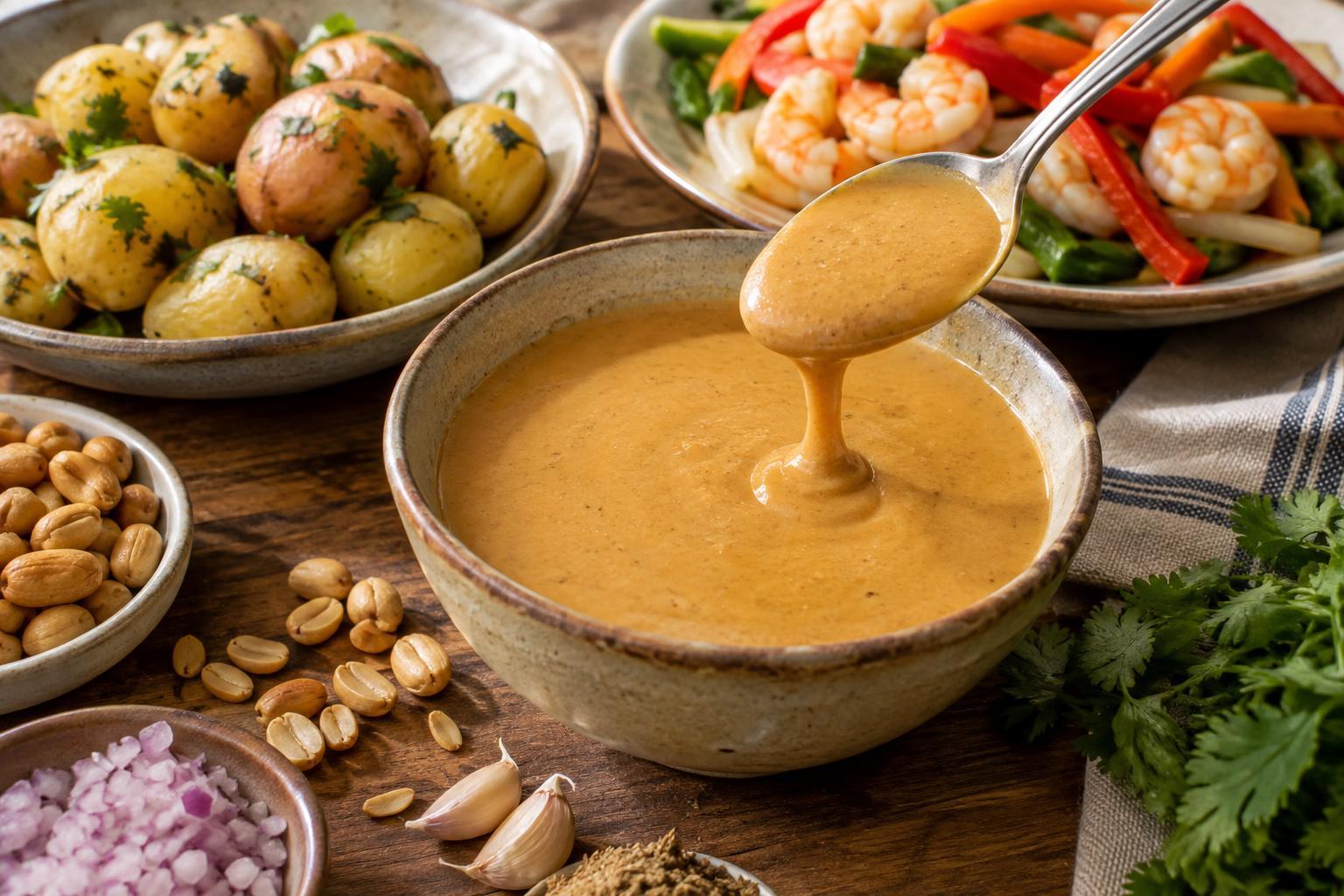
Return the mixture to a saucepan and simmer gently, stirring often, for several minutes. Peanut sauce thickens as the ground nuts absorb liquid, and it may thicken further as it cools. Aim for a consistency slightly looser than you want on the plate. When you lift a spoon, the sauce should coat it and fall in a steady ribbon, not drop in a heavy clump. If it is too thick, add warm liquid a tablespoon or two at a time. If it is too thin, simmer it briefly, stirring and checking frequently so it does not catch on the bottom.
Match the sauce to the dish
The right thickness depends on how you plan to serve salsa de maní. For boiled potatoes or roasted vegetables, make it pourable enough to settle around the pieces but thick enough to cling to them. For a dipping sauce, reduce it a little longer so a spoonful stays put. To spoon it over cooked fish or shrimp, keep it looser; a dense layer can overwhelm a delicate piece of seafood.
Taste after you have settled on the texture. Add salt in small pinches, especially if the peanuts were salted. A little lime juice can lift a rich sauce, but add it at the end and taste before adding more. The goal is a savory peanut flavor with enough brightness to make another bite appealing, not a sharply sour sauce. Chopped cilantro or scallions can go on top for freshness without changing the texture in the pan.
Avoid common texture problems
A gritty sauce may simply need more blending, particularly if the peanuts were not ground finely at the start. Let a hot mixture cool enough for your blender’s instructions, and avoid sealing hot liquid in a blender jar without a way for steam to escape. If you prefer a rustic sauce, a little texture is fine; if you want it silkier, blend again with a splash of warm liquid.
If the sauce turns pasty, resist adding oil first. Warm water or broth usually loosens it more effectively, while extra oil can make it feel heavier. If you see a layer of oil on top, lower the heat and whisk in a little warm liquid until the sauce comes together. Keep the simmer gentle rather than boiling hard. For a sauce that tastes flat despite enough salt, try a small squeeze of lime or another minute of gentle cooking to bring the onion and peanut flavors together.
Serve and store it carefully
Serve salsa de maní warm or at room temperature, and let anyone eating know it contains peanuts. Use clean utensils when serving, particularly if the sauce will be shared at a table. If you pair it with seafood, cook the seafood safely and keep its preparation separate from ingredients served ready to eat. Citrus juice may change the appearance and texture of raw seafood, but citrus curing does not make it equivalent to cooked seafood.
Refrigerate leftover sauce promptly in a covered container. It will likely firm up when cold; reheat it gently, stirring in a little water until it returns to the consistency you want. Adjust the seasoning once it is warm. That final check is often all a make-ahead batch needs before it is ready for potatoes, vegetables, or another freshly cooked dish.