Start with a flexible sauce
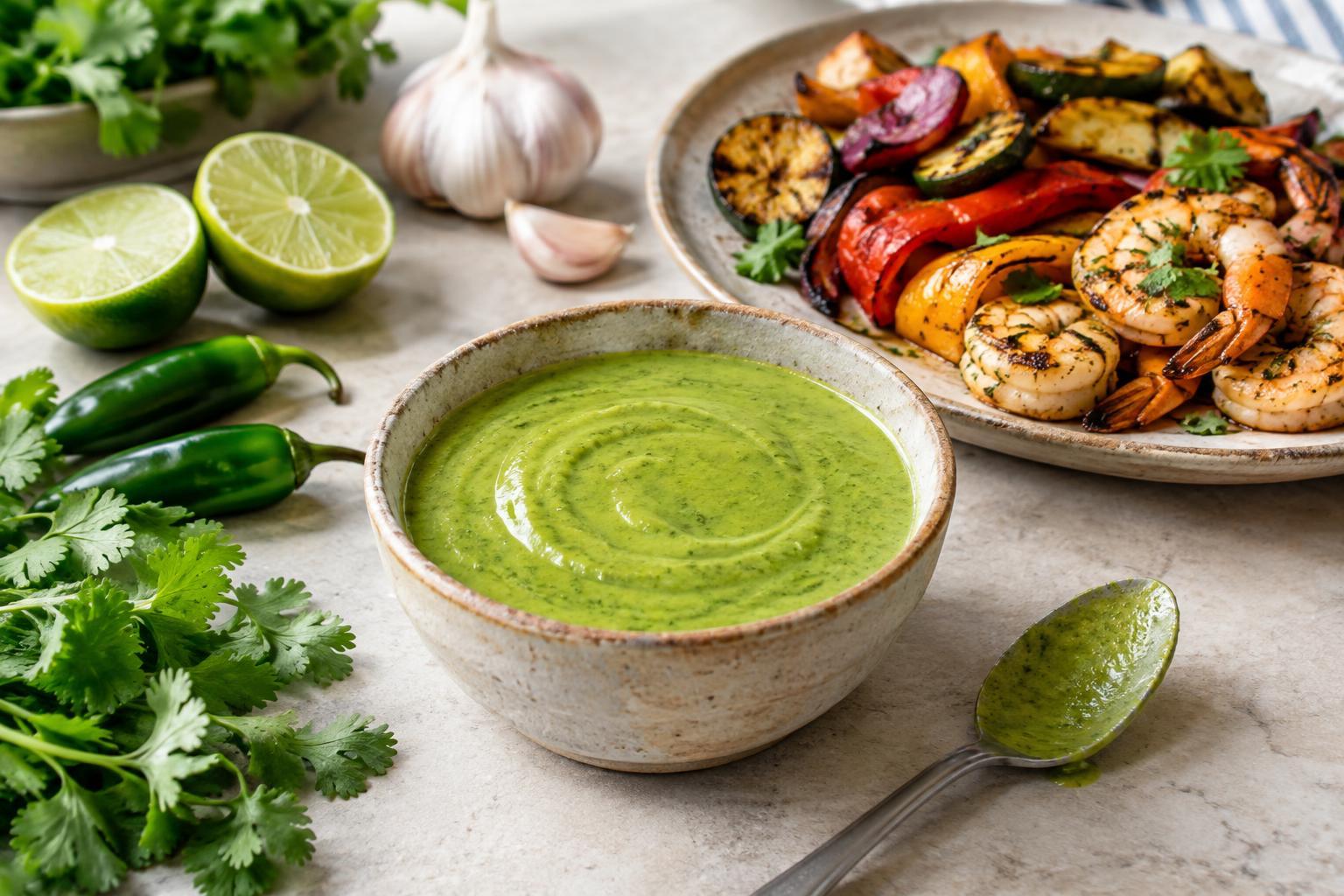
Ají verde is a lively green sauce associated with Peruvian-style meals, especially as a companion to chicken, potatoes and other savory dishes. Recipes vary from kitchen to kitchen: some are thin and herb-forward, while others are creamy enough to spread on a sandwich. The version below uses cilantro, green chile, lime and a mayonnaise base. Think of it as a starting point rather than a fixed formula.
For about one cup of sauce, gather a loosely packed cup of cilantro leaves and tender stems, one small green chile, one small garlic clove, three tablespoons of mayonnaise, one tablespoon of lime juice and two tablespoons of neutral oil. Keep a few tablespoons of cold water nearby to adjust the texture, along with salt to taste. A spoonful of plain yogurt can replace some of the mayonnaise if you prefer a tangier sauce, though the result may be thinner.
Blend for a smooth, pourable texture
Wash the cilantro and dry it well. Excess water can dilute the flavor before you have a chance to season the sauce. Roughly chop the herbs and chile so they move easily around the blender blades. Add the cilantro, chile, garlic, mayonnaise and lime juice to a small blender jar or food processor. Blend until the herbs are finely broken down, scraping the sides as needed. Then add the oil and blend briefly until the sauce looks even and glossy.
If the mixture sticks above the blades, add cold water one teaspoon at a time rather than pouring in a large amount. A small blender generally makes a smoother sauce with this quantity; in a large blender, doubling the batch may help the ingredients circulate. For a finer finish, blend a little longer or press the sauce through a sieve. Straining removes some of the herb flecks, so skip it if you like a more rustic texture.
Taste before adding salt. The sauce should have a clear herbal flavor, noticeable but comfortable heat and enough acidity to keep its richness from feeling heavy. If it tastes flat, try a pinch of salt first. Add lime a little at a time: too much can overpower the cilantro and make a creamy sauce seem sharp.
Adjust the heat without losing the balance
Green chiles can vary considerably in heat, even within the same type. For a gentler first batch, remove the chile’s seeds and pale inner ribs and start with half the chile. Blend, taste and add more only if you want it. For a hotter sauce, add more chile in small pieces, blending and tasting between additions. Serrano usually brings a more assertive kick than a typical jalapeño, but tasting remains more reliable than assuming any individual pepper will be mild or hot.
If you overshoot the heat, make a little more sauce without chile and combine the two batches. Extra mayonnaise or yogurt can soften the impression of heat, but adding too much will also mute the herbs. Lime and salt can bring the flavors back into focus; they will not remove the chile’s heat. When cutting hot peppers, avoid touching your eyes and wash your hands, knife and board afterward.
Serve it well and keep it chilled
Spoon ají verde over grilled fish, shrimp, roasted sweet potatoes or corn, or serve it alongside crisp vegetables. It also works as a sandwich spread or as a dip for boiled potatoes. If you want to pour it over a platter, loosen a portion with a little cold water just before serving; keep the rest thicker so it remains useful in other dishes.
Because this sauce contains fresh herbs and a creamy base, cover and refrigerate it promptly. Use a clean spoon each time you serve it, and make a fresh batch within a few days rather than leaving it on the table for extended periods. If serving it with seafood, handle and cook the seafood appropriately. Lime juice adds flavor, but citrus curing does not make raw seafood equivalent to cooked seafood.