The short answer starts with the package
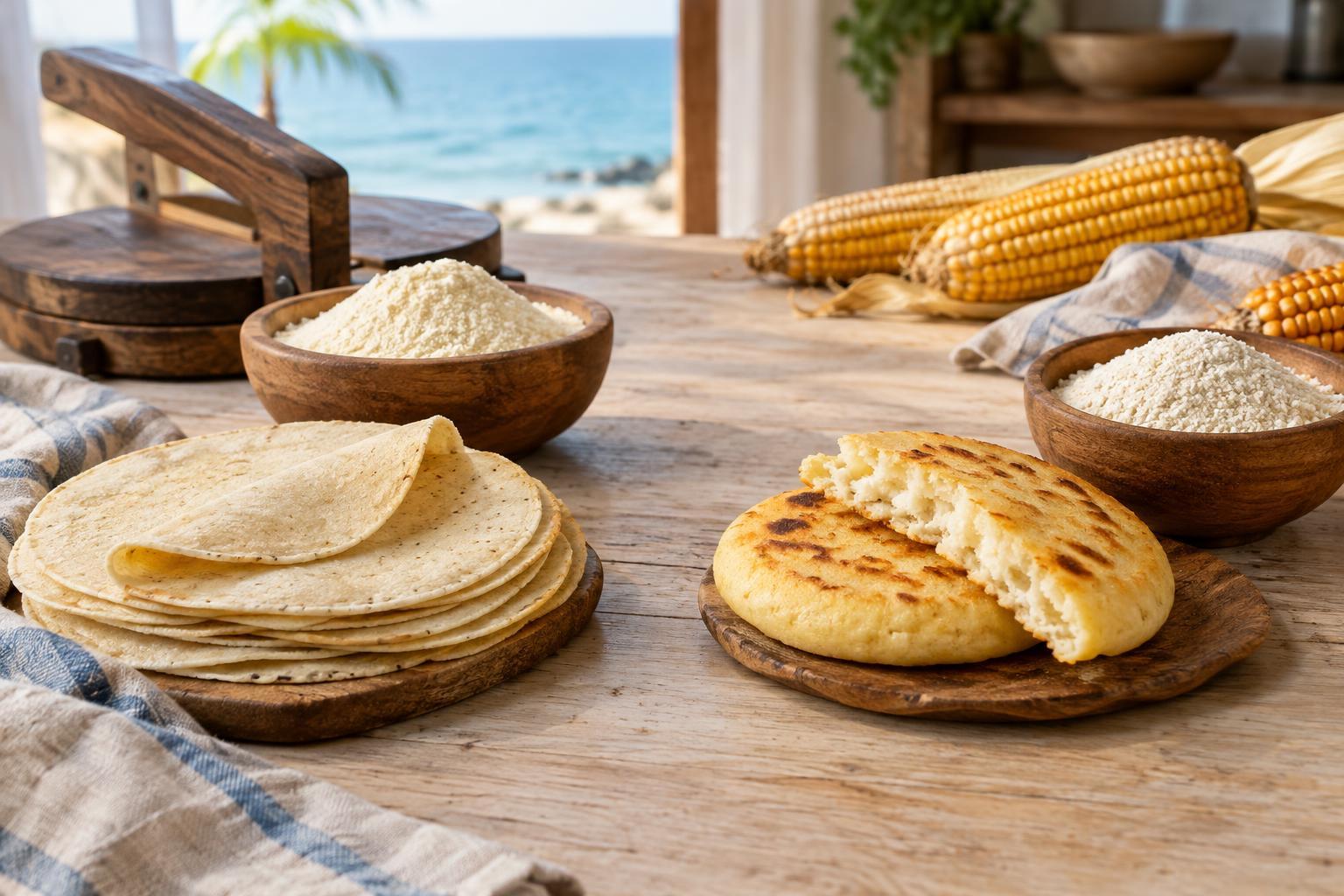
For tender corn tortillas, reach for masa harina: dried flour made from corn that has been nixtamalized. For classic arepas, reach for precooked corn flour intended for arepas, often called masarepa. Add water to either one and you can form a dough, but that shared convenience does not make the ingredients interchangeable.
The words “corn flour” and “cornmeal” vary by region and brand, so read beyond the front of the bag. A package labeled “instant corn masa flour” or “masa harina” is generally meant for tortillas and other masa-based dishes. A package labeled “precooked corn flour” or “arepa flour” is the usual choice for arepas. Ordinary dry cornmeal, which has not been prepared for either dough, is a third ingredient—not a shortcut to both.
What makes masa harina suited to tortillas
Masa harina begins with nixtamalization. Corn is cooked and soaked in an alkaline solution, traditionally made with food-grade calcium hydroxide, then washed and ground into masa. To make shelf-stable masa harina, that masa is dried and milled. The process gives the flour its characteristic aroma and helps it form a cohesive dough when mixed with water.
A tortilla needs to be pressed thin, lifted without falling apart and cooked on a hot surface. Hydrated masa harina is well suited to that job. The dough should feel soft and pliable, rather than crumbly or sticky. If the edges split badly when you press a test tortilla, work in a little more water and let the dough rest briefly so the flour can hydrate. If it sticks stubbornly to your hands or the press lining, add a little more masa harina.
Masa harina also appears in other preparations, but check the label when following a specific recipe. Some products are milled or formulated with particular uses in mind. For a basic tortilla, plain masa harina intended for tortillas is the most straightforward place to start.
Why arepas call for precooked corn flour
Arepa flour is made from corn that has been cooked, dried and ground, but it is generally not nixtamalized in the way tortilla masa harina is. It absorbs water to make a dough that can be patted into thicker rounds. Those rounds can be cooked on a griddle, in a pan or by another method suited to the recipe. Their sturdy shape makes them useful for splitting and filling or serving alongside a meal.
Arepas vary across kitchens and regions. Some are thin, while others are thick enough to open for fillings; some recipes add salt, fat or other ingredients to the dough. The dependable starting point is the flour called for in your recipe. Mix the precooked flour with water, let it rest for a few minutes and feel the dough before shaping. It should hold together smoothly without dry cracks around the edges. Add water gradually if it feels brittle, because a small adjustment is easier to manage than an overly wet dough.
Do not assume that any bag of finely ground corn will behave like arepa flour. Regular cornmeal usually takes longer to hydrate and may leave the dough gritty or difficult to shape. The word “precooked” is an important clue.
Can you swap one for the other?
You can cook with either flour creatively, but a direct one-for-one swap will change the result. Masa harina brings the flavor and handling qualities associated with nixtamalized corn; an arepa made with it may taste more like a thick masa cake than the arepa you expected. Precooked arepa flour, meanwhile, may be difficult to press into a thin tortilla that handles and bends like one made with masa harina.
If you have only one flour on hand, it is usually more satisfying to choose a recipe designed for it than to force it into another dough. Make tortillas or another masa-based dish with masa harina; make arepas with arepa flour. For either dough, follow the package or recipe for an initial water ratio, then adjust by touch. Grind size and absorption can differ among products, and even a well-measured dough may need a little more water after resting.
How to choose and store the right bag
At the store, look for both the preparation and the intended dish on the label. “Nixtamalized” points toward masa harina; “precooked” together with “for arepas” points toward arepa flour. White and yellow versions of both may be available. Color can affect appearance and flavor, but it does not tell you which process the corn has undergone.
Keep opened flour tightly sealed in a cool, dry place and follow any storage directions on the package. Before using a bag that has been sitting for a while, check that it smells pleasant and shows no signs of moisture or pests. With the right flour in hand, the distinction becomes simple: thin, flexible tortillas start with masa harina, while the familiar thick arepa starts with precooked arepa flour.