What canned coconut milk brings to a dish
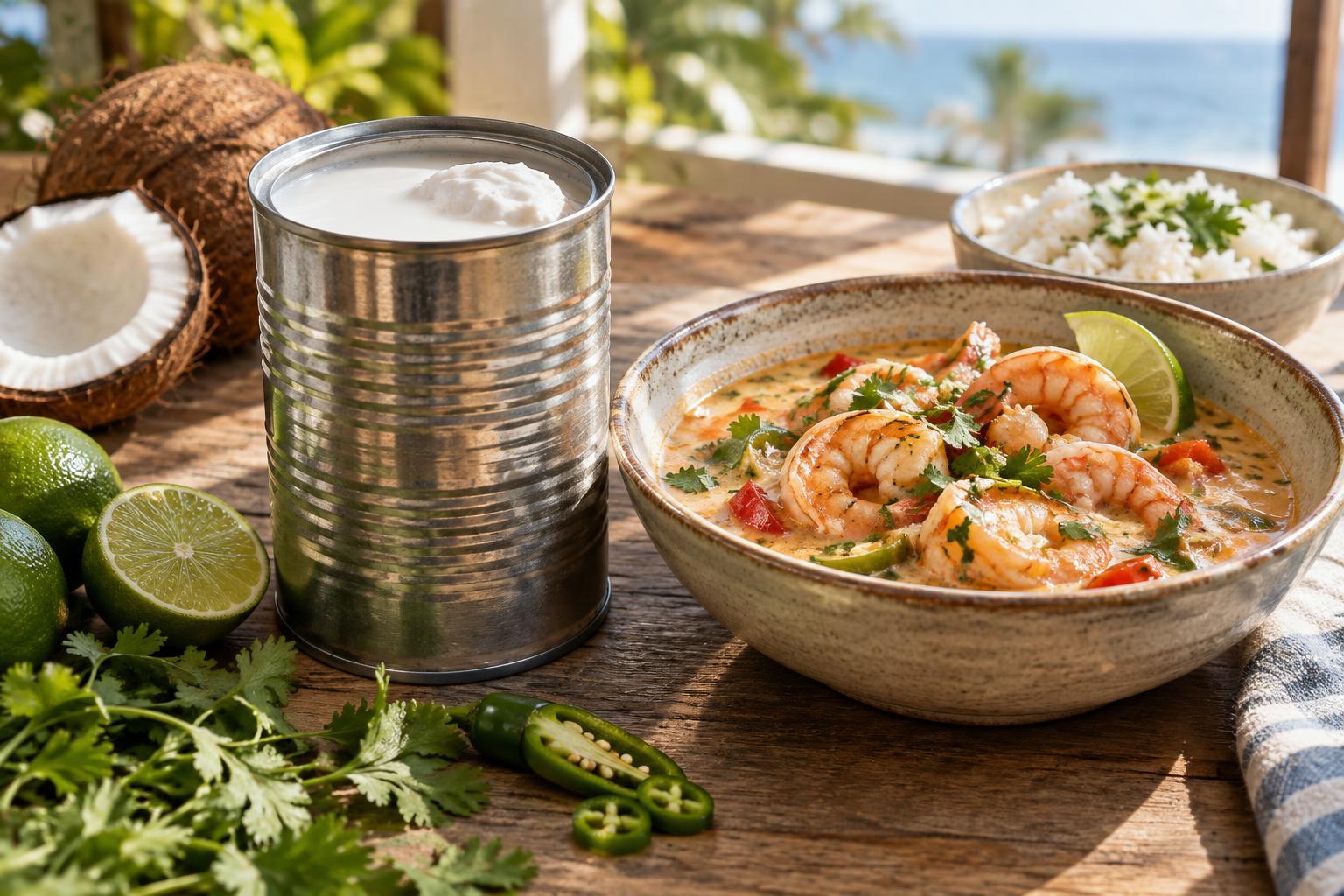
Canned coconut milk is made by combining coconut flesh with water and extracting a creamy liquid. In savory cooking, it does more than add coconut flavor: its fat gives sauces body and softens the sharp edges of chiles, ginger and citrus. It can make a quick pot of rice feel substantial or give a seafood stew a silky broth without dairy.
There is no single coconut-milk profile for every coastal Latin American dish. Recipes vary by place and household, and some use coconut only as a quiet background note. Start with the dish you want to make rather than assuming the richest can is always best. A delicate fish, a hearty bean pot and a citrus-forward vegetable side may each call for a different balance.
Read the label before choosing a can
First, check that you are buying unsweetened canned coconut milk. Coconut cream is usually thicker and richer, while a carton of coconut beverage is generally thinner and intended for drinking. Cream of coconut is a different product commonly used in sweet preparations; it may contain substantial added sugar and is usually a poor substitute in a savory stew.
Ingredient lists can help you predict how a can will behave. Some contain little beyond coconut and water; others include gums or other stabilizers that help maintain a uniform texture. Neither is automatically the better choice. If you want a sauce that emulsifies easily, a stabilized milk may be convenient. If you prefer a shorter ingredient list or want to use the thick layer that rises to the top, choose accordingly. Compare labels rather than relying on the color or wording on the front of the can.
Match richness to the cooking method
Full-fat coconut milk is a useful starting point for sauces and stews where coconut is part of the main flavor. It provides enough body to coat vegetables, fish or shrimp and can stand up to aromatic ingredients. For coconut rice, it can produce a pleasingly rich result, but the total liquid still needs to suit the rice and cooking method. If the finished dish feels too heavy, use some water or broth alongside it next time.
Light coconut milk is often better when you want coconut flavor without a thick sauce, such as in a brothy soup or a gently seasoned vegetable dish. It may taste less rich because it generally contains more water relative to coconut. You can also dilute full-fat milk yourself, which gives you control over the final texture. Coconut cream is best treated as a concentrated ingredient: add a little at a time when a sauce needs extra body rather than swapping it one-for-one into a recipe written for coconut milk.
Balance coconut with savory and bright ingredients
Coconut milk tastes rounded and mildly sweet even when the can contains no added sugar. Salt, onion, garlic, chiles and herbs can keep a savory dish from tasting flat. Tomato or a modest splash of citrus can add contrast. For a gentle seafood stew, build flavor in the pan first, add coconut milk, then cook the seafood just until it is done rather than leaving it to simmer for a long time.
Add lime or other citrus juice near the end and taste before adding more. A small amount may brighten the sauce; too much can overwhelm its coconut flavor. Citrus can also change the texture of a hot coconut sauce, so stir it in gradually over low heat or after taking the pan off the heat. If serving citrus alongside raw or lightly cooked seafood, remember that citrus curing does not make raw seafood equivalent to cooked seafood.
Handle and store it with care
Separation in an unopened can is common: a firm, pale layer may sit above thinner liquid. Stir or whisk the contents if you want an even milk, or spoon out the thicker portion for a richer start to a sauce. Check the can before opening and follow any storage directions on its label. Do not use a can that is bulging, leaking or badly damaged.
Once opened, transfer unused coconut milk to a covered container, refrigerate it promptly and use it within the timeframe given on the package. Keep seafood chilled separately until you are ready to cook, and avoid putting cooked food on a plate that held raw seafood unless it has been washed. Good handling matters just as much as choosing the right richness level: the best can is one that suits the dish and is used safely.