What hearts of palm bring to a salad
Hearts of palm are the tender inner portions of certain palm stems. They are pale, mild and pleasantly soft, with a bite that can range from gently crisp to almost creamy. Because their flavor is subtle, they work especially well with the bright ingredients common in coastal Latin American cooking: lime, orange, cilantro, chile, tomato and avocado.
Most home cooks buy hearts of palm packed in liquid, ready to drain and slice. They can anchor a meatless salad, add contrast to crunchy vegetables or stretch a salad made with cooked shrimp. Think of them as an ingredient that carries a dressing rather than one that needs a heavy marinade. A brief toss just before serving usually gives them plenty of flavor without overwhelming their delicate texture.
Canned vs. jarred: what to look for
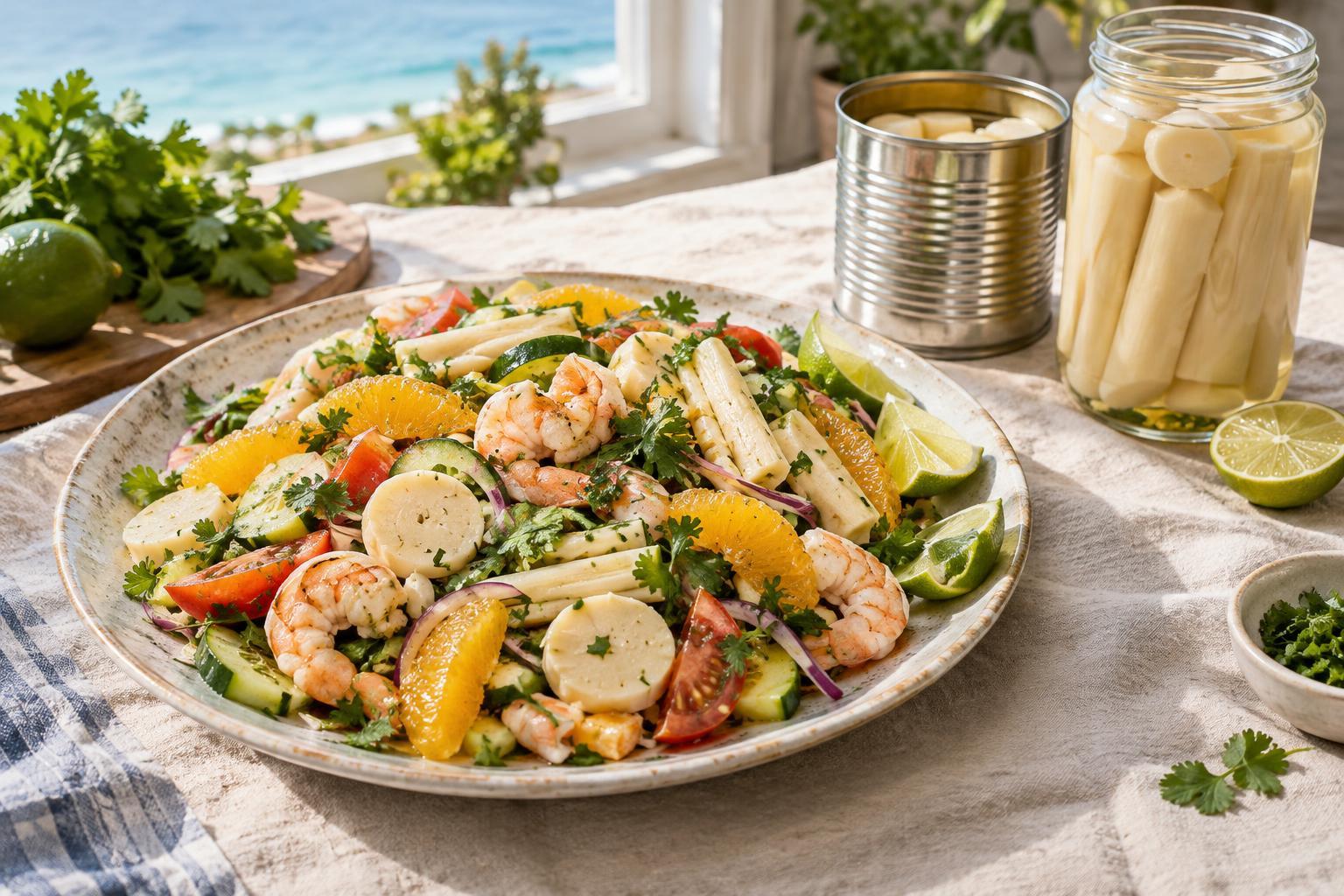
Both canned and jarred hearts of palm are convenient pantry options. The container alone does not guarantee a particular texture: firmness depends on the product, the size of the pieces and how they were packed. Whole pieces or larger sections often give you more control over the final cut, while pre-sliced pieces save time but may be more prone to breaking during mixing.
Read the label if you have a preference about salt or acidity. Some hearts of palm are packed in a salty brine; others have a more noticeably tangy packing liquid. A glass jar lets you see the pieces before buying, while a can keeps them out of the light. Neither format is automatically better for salads. Choose intact pieces when appearance matters, and compare labels if you are trying to manage saltiness.
At home, drain a piece and taste it before making the dressing. If it seems too salty or sharply flavored, give the hearts of palm a quick rinse and drain them well. If they taste pleasantly seasoned, you may only need to drain them. Patting them dry helps a citrus dressing cling rather than becoming diluted by packing liquid.
Cut and toss for the best texture
For a composed salad, slice whole hearts of palm into thick rounds or cut them lengthwise into spears. For a chopped salad, use bite-size pieces that can survive a gentle toss. A sharp knife and a light touch help preserve their shape. If the pieces are already very soft, lay them over the dressed vegetables at the end instead of stirring them through the bowl.
Build the salad around texture. Thinly sliced red onion, cucumber, radish and sweet pepper provide crunch; ripe tomato and avocado add softness of a different kind. Dress crisp vegetables first, then fold in the hearts of palm shortly before eating. Add avocado last so it stays in distinct pieces. Citrus juice supplies brightness, but a little olive oil rounds out its sharpness and helps carry herbs and spices.
Three simple salad directions
For a citrus and herb salad, combine well-drained hearts of palm with orange segments, cucumber, thin red onion and cilantro. Toss with lime juice, olive oil and a pinch of salt, tasting before adding more because the hearts of palm may already be seasoned. Serve it beside grilled vegetables or a simply cooked fish fillet.
For a creamy-crunchy version, arrange hearts of palm, avocado, radish and tomato over lettuce. Add a dressing of lime juice, olive oil and a small amount of finely chopped chile. Keep the chile separate if guests have different heat preferences. Toasted pumpkin seeds can add crunch, but sprinkle them on at the table so they stay crisp.
For a heartier coastal-inspired salad, pair hearts of palm with chilled, fully cooked shrimp, diced cucumber and herbs. Keep the shrimp refrigerated until assembly, and use clean utensils and a separate cutting surface if you are preparing raw seafood elsewhere in the kitchen. Lime juice makes a lively dressing, but citrus curing does not make raw seafood equivalent to cooked seafood. Use cooked shrimp here rather than relying on the dressing to prepare it.
Store and serve with care
Before opening, check the package and follow its storage directions. Avoid cans that are bulging, leaking or badly damaged, and jars with compromised seals. Once opened, refrigerate leftover hearts of palm promptly in a clean, covered container, following the label’s guidance for how long to keep them. Do not leave an opened can as their storage container.
For the best salad, assemble close to serving time. Hearts of palm can sit briefly with a dressing, but prolonged tossing and soaking may make softer pieces fall apart. If you are entertaining, wash and cut the vegetables ahead, keep perishable ingredients chilled, and combine everything when you are ready to bring the bowl to the table.