Start with rice and beans that can hold their shape
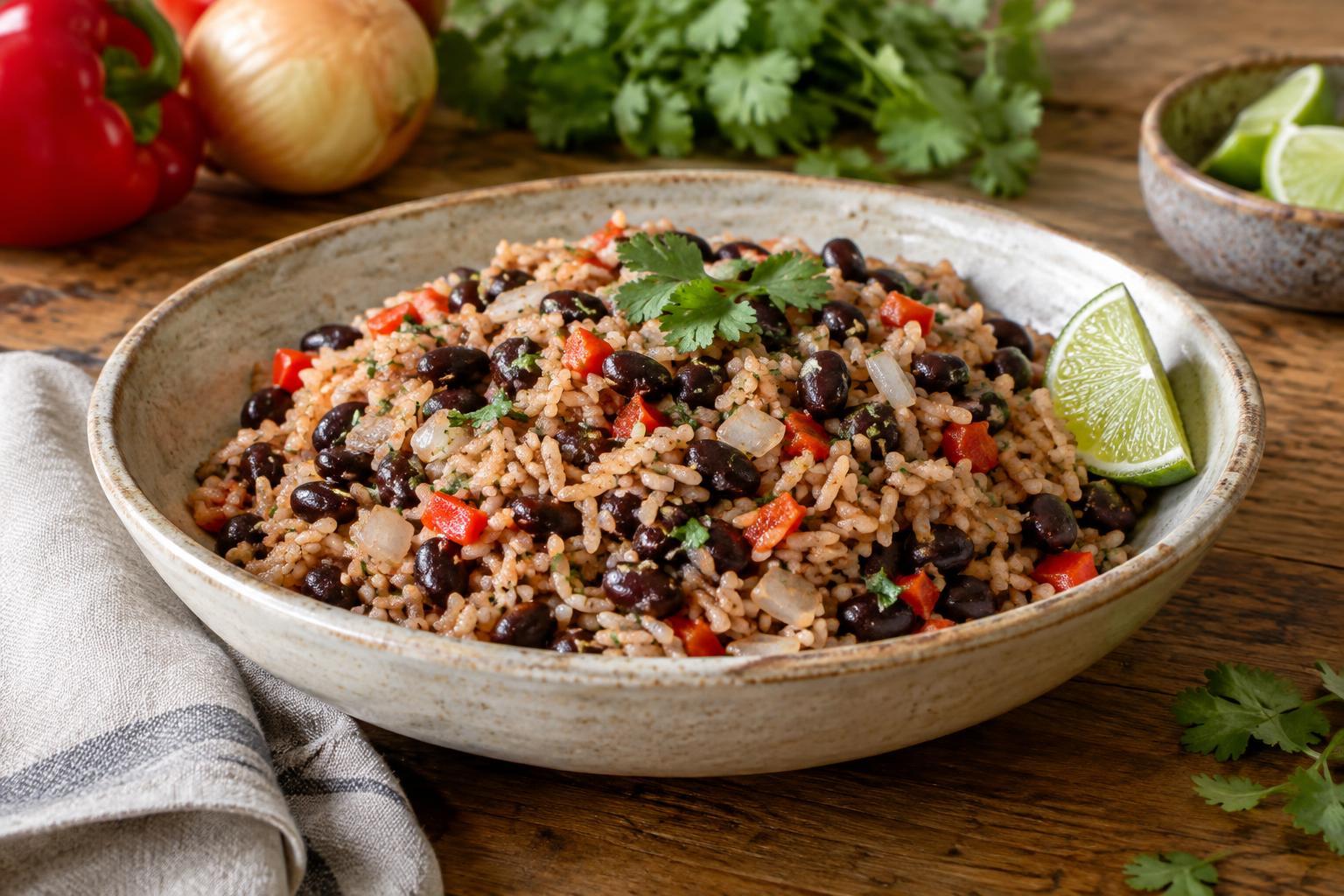
Gallo pinto is a comforting way to give cooked rice and beans a second life. In Costa Rica, it is often served at breakfast, but its savory flavor also makes it a useful side for lunch or dinner. The goal is not a creamy rice dish: you want tender beans and separate grains of rice, with a little color and flavor from the bean liquid.
For about four side servings, start with roughly two cups of cooked rice and one and a half cups of cooked black beans. White rice is a familiar choice, though other rice can work if it is fully cooked and not sticky. Beans cooked until tender but still intact are easiest to fold into the pan. If using canned beans, drain them and reserve a little of their liquid. If using home-cooked beans, do the same with their cooking broth.
Cool, refrigerated rice is especially convenient because the grains tend to separate more easily. Break up any firm clumps with a fork before cooking. A few tablespoons of bean liquid will help season and color the rice; pouring in too much at once is one of the quickest ways to make gallo pinto soggy.
Build a savory base before adding the rice
Set a wide skillet over medium heat and add a little oil. Cook a finely chopped small onion and sweet pepper until softened, stirring so they do not scorch. Add a minced garlic clove near the end, if you like. This short sauté gives the finished dish flavor without asking the rice to spend too long in the pan. A wide skillet also gives moisture more room to evaporate.
Stir in the beans with two or three tablespoons of their liquid, then add the rice. Spread the mixture across the pan and fold it gently with a spatula. Rather than stirring constantly, let it sit briefly between turns so excess moisture can cook away. If the rice looks dry before it is heated through, add bean liquid one spoonful at a time. If it looks wet, keep the pan uncovered and give it a little more time.
For a Costa Rican-style finishing touch, add a modest splash of salsa Lizano, a tangy, lightly sweet condiment often used in gallo pinto. Taste before adding salt, since the beans and sauce may already be seasoned. If you do not have it, the dish can still be good: use a small amount of a savory sauce you enjoy, then adjust to taste rather than trying to make an exact substitute. Check the label if you need the dish to be vegetarian.
Keep the texture light and the seasoning balanced
The best moment to stop cooking is when the rice and beans are hot, the grains look distinct and there is no puddle of liquid at the bottom of the skillet. If the beans begin to break down, switch from vigorous stirring to gentle folding. A large batch is easier to manage in two rounds than in an overcrowded pan, where trapped steam can soften the rice.
Finish with chopped cilantro if you enjoy it, and offer hot sauce or lime wedges at the table. Lime brightens a serving, but add it sparingly to the skillet so it does not overpower the savory beans. Gallo pinto can sit beside eggs, sautéed vegetables or a simple salad. For a coastal-inspired plate, it also pairs well with properly cooked fish or shrimp.
Handle cooked rice and beans with care
Good texture and safe handling go together. Do not leave cooked rice or beans on the counter overnight to dry out. After cooking, portion leftovers into shallow containers and refrigerate them promptly rather than waiting for a large pot to cool completely. Keep them refrigerated until you are ready to make gallo pinto, and use leftovers while they are still fresh.
When preparing the dish, heat the rice and beans thoroughly until steaming hot throughout. Return any remaining gallo pinto to the refrigerator promptly in a shallow container. If cooked rice or beans have been left out for an extended period, it is safer to discard them than to rely on reheating to fix improper storage. Starting with well-stored ingredients lets this simple side be both appealing and practical.