Why chayote works as a quick side
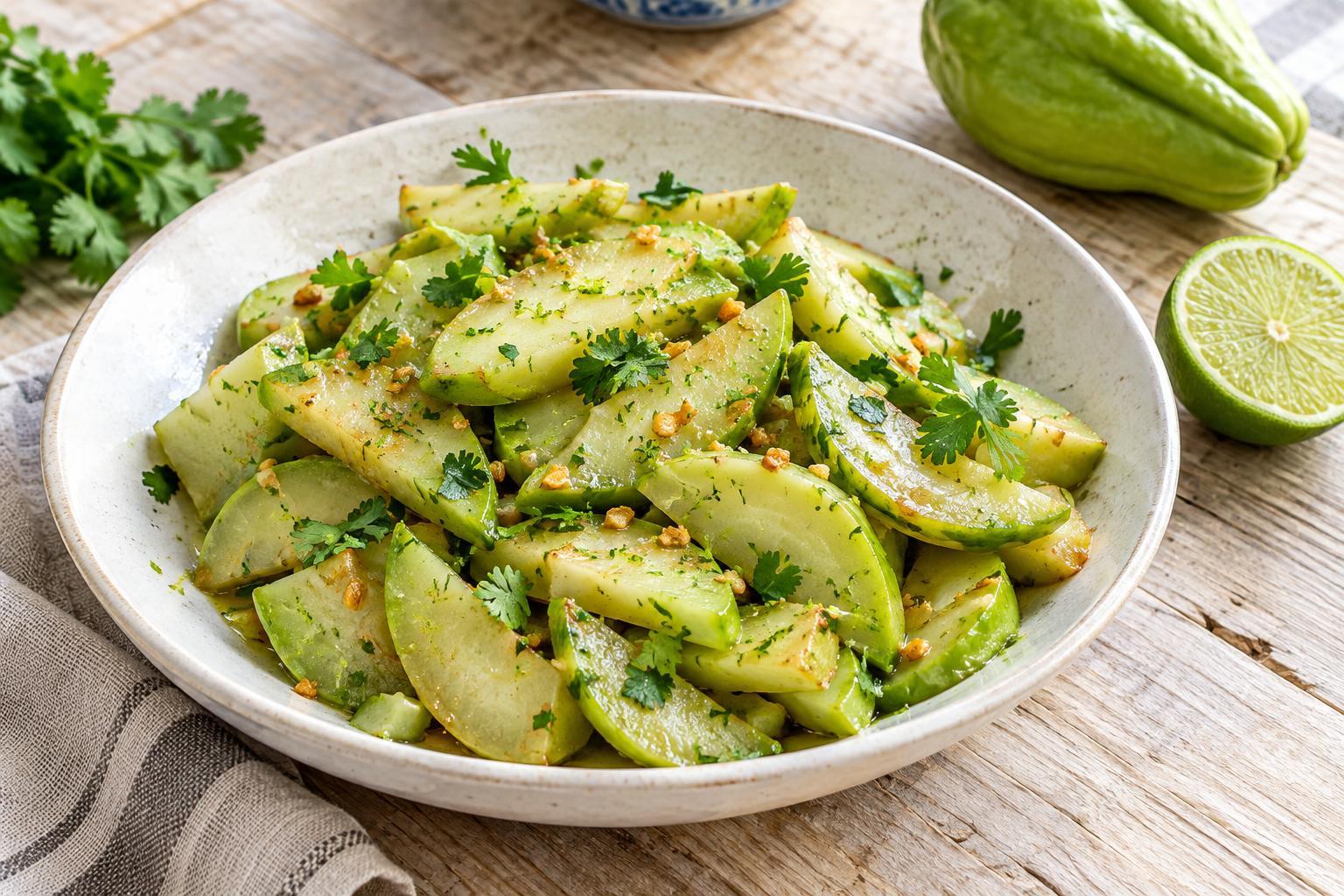
Chayote is a mild squash with a crisp texture that softens when cooked. Its gentle flavor leaves room for garlic, herbs and a squeeze of citrus, making it a useful side for rice, beans, grilled vegetables or cooked seafood. The goal here is not to brown every piece deeply. It is to cook the chayote through while keeping a little firmness at the center.
For about four side servings, start with two medium chayotes, two or three garlic cloves, a tablespoon or two of cooking oil, salt, and a lime. A handful of chopped cilantro or parsley is optional. These amounts are flexible: the size of the squash and the width of your pan matter more than exact measurements.
Prepare the squash and make the cuts match
Rinse and dry each chayote, then halve it lengthwise. You can usually leave tender skin on; if the skin feels thick or tough, peel it first. Check the pale seed in the center. A soft seed can be cooked with the squash, while a firm one is easy to scoop out. Chayote can leave a sticky film on your hands and knife, so wash them after preparation. If it bothers your skin, consider wearing kitchen gloves.
Put each half cut-side down so it sits steadily on the board. Slice it into half-moons about a quarter inch thick, or cut those slices into batons of similar thickness. Consistency matters more than the shape: thin scraps will soften before thick chunks are ready. If one end of a chayote is much narrower than the other, adjust your cuts to keep the pieces close in size. Mince the garlic separately so it can go into the pan later.
Sauté until tender, not limp
Heat a wide skillet over medium to medium-high heat and add the oil. When it shimmers, spread the chayote in a fairly even layer. If the pan is crowded, cook in two batches; a packed pan traps moisture and makes it harder to control the texture. Let the pieces sit briefly before stirring, then toss them every minute or two so they cook evenly. A few golden edges are welcome, but dark browning is not necessary.
After several minutes, season lightly with salt and test a thicker piece with a fork. It should yield with a little resistance rather than feel hard or collapse. Depending on the thickness of your cuts, your pan and the heat, this may take roughly eight to twelve minutes. If the outside starts coloring before the middle softens, lower the heat and add a spoonful of water. Cover the pan for a minute or two, then uncover it and let any remaining moisture evaporate.
Add the garlic at the right moment
Garlic needs less time in the pan than chayote. When the squash is nearly tender, make a small space in the skillet and add the minced garlic, with a little more oil if the pan looks dry. Stir for about thirty seconds, then toss it through the chayote. Keep it moving until fragrant and pale gold. If the garlic darkens quickly, take the pan off the heat; burnt garlic can overpower the squash.
Turn off the heat and squeeze in a little lime juice. Taste before adding more: the citrus should brighten the dish, not hide the chayote. Add chopped cilantro or parsley if you like, and adjust the salt. For a warmer finish, try a small pinch of ground cumin or mild chile flakes, but keep the seasoning restrained enough that the vegetable remains the focus.
Serve it while the texture is fresh
Garlicky chayote is best served soon after cooking, when the pieces are warm and still have a gentle bite. Spoon it alongside beans and rice, tuck it into a vegetable plate, or offer it with simply cooked fish. A lime wedge at the table lets everyone adjust the acidity without making the whole pan too sharp.
If you have leftovers, cool them promptly and refrigerate them in a covered container. Reheat gently in a skillet just until hot; prolonged cooking will make the chayote softer. You can also use chilled leftovers in a composed salad with other cooked vegetables. Either way, the key is the same: even cuts give you control, and checking a piece as it cooks is more reliable than waiting for the pan to look done.