A bright, tender side for a coastal table
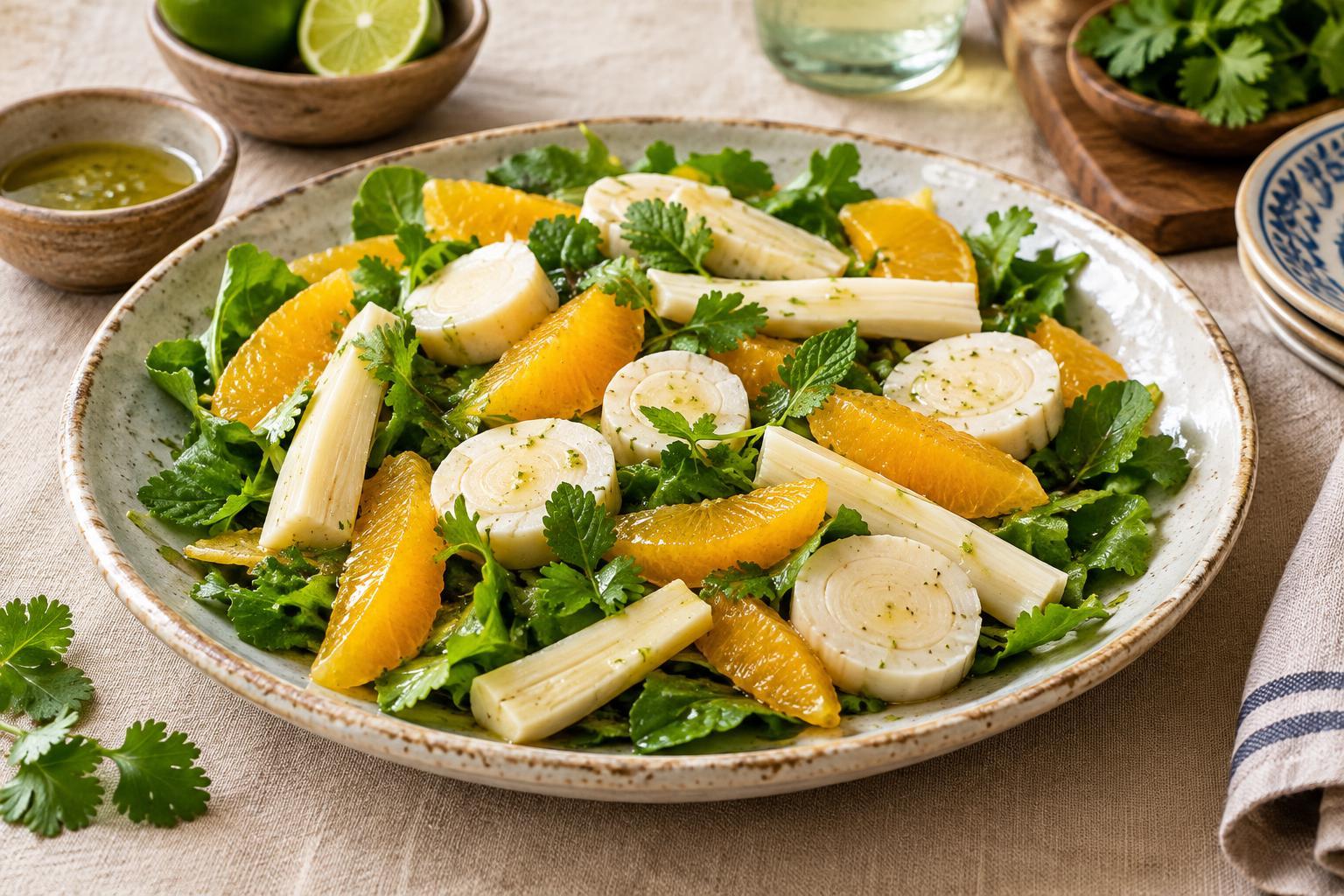
Hearts of palm have a mild flavor and a tender, layered texture that welcome citrus without competing with it. Orange brings sweetness and juice; lime adds a sharper edge. Together, they make a refreshing side for grilled vegetables, rice dishes or cooked seafood. The trick is to build the salad around the hearts of palm rather than tossing them as though they were sturdy chopped vegetables.
For four side servings, gather two 14-ounce cans or jars of whole hearts of palm, two oranges, a small handful of thinly sliced red onion, and about four cups of tender greens, such as butter lettuce or arugula. A little chopped cilantro is optional. Choose whole hearts if possible: they give you more control over the size of the slices, although pre-cut pieces will also work.
Drain gently before you slice
Open the hearts of palm and pour off the packing liquid through a colander. Rather than shaking the colander, leave the hearts to drain for a few minutes. If the packing liquid tastes noticeably salty or briny, give them a brief, gentle rinse with cool water. Lift the pieces out by hand or with a broad spoon, then lay them on a clean kitchen towel or paper towels. Pat the tops lightly; pressing hard can separate their layers.
Draining and drying do more than keep the plate tidy. Excess liquid dilutes the dressing and can make the greens wilt. You do not need to get the hearts completely dry, but they should not be dripping when they reach the serving platter. If a piece has already split, keep it for the center of the salad rather than trying to force it back together.
Cut the hearts and oranges with a light touch
Use a sharp knife and a steady cutting board to slice each whole heart crosswise into rounds about half an inch thick. A clean downward cut is gentler than sawing back and forth. For especially delicate hearts, cut them lengthwise once and leave them in larger pieces. Move the slices with a wide spatula or your fingertips instead of scraping them across the board.
Peel the oranges, removing as much white pith as you like, and cut them into rounds or segments over a bowl to catch their juice. Orange rounds make a striking platter, while segments are easier to eat alongside the hearts of palm. Remove any seeds. If the red onion tastes too strong for the salad, soak the slices briefly in cold water, then drain and dry them before adding them.
Whisk a dressing, then assemble in layers
For the dressing, whisk together two tablespoons of the reserved orange juice, one tablespoon of lime juice, three tablespoons of olive oil and a small pinch of salt. Taste it with a piece of orange or a leaf of lettuce, then adjust: a little more lime makes it brisker, while more olive oil softens the acidity. Add black pepper if you enjoy it. The dressing should taste lively without overwhelming the mild hearts of palm.
Spread the greens over a platter and toss them with just enough dressing to coat them lightly. Arrange the orange pieces and onion on top, then place the hearts of palm between them. Spoon a little dressing over the hearts just before serving, and scatter cilantro over the finished salad if using. This layered approach gives every component some flavor while sparing the tender rounds a vigorous toss.
If you prefer a bowl, dress the greens first and add the hearts of palm last. Fold everything together once or twice with broad utensils, lifting from underneath rather than stirring. Keep any extra dressing at the table so guests can add it to their own portions.
Make-ahead and serving notes
You can drain and slice the hearts of palm, prepare the oranges, and whisk the dressing ahead of serving time. Keep the components covered and refrigerated separately, then assemble the salad when you are ready to eat. This helps the greens stay crisp and the hearts hold their shape. Refrigerate leftovers promptly in a covered container; the salad will be softer after it sits in dressing, so it is best enjoyed fresh.
For a little crunch, finish the platter with toasted pumpkin seeds or thinly sliced radishes. If serving it beside seafood, use seafood that has been handled and prepared appropriately. Citrus juice can change the texture and appearance of raw seafood, but citrus curing does not make it equivalent to cooked seafood.